

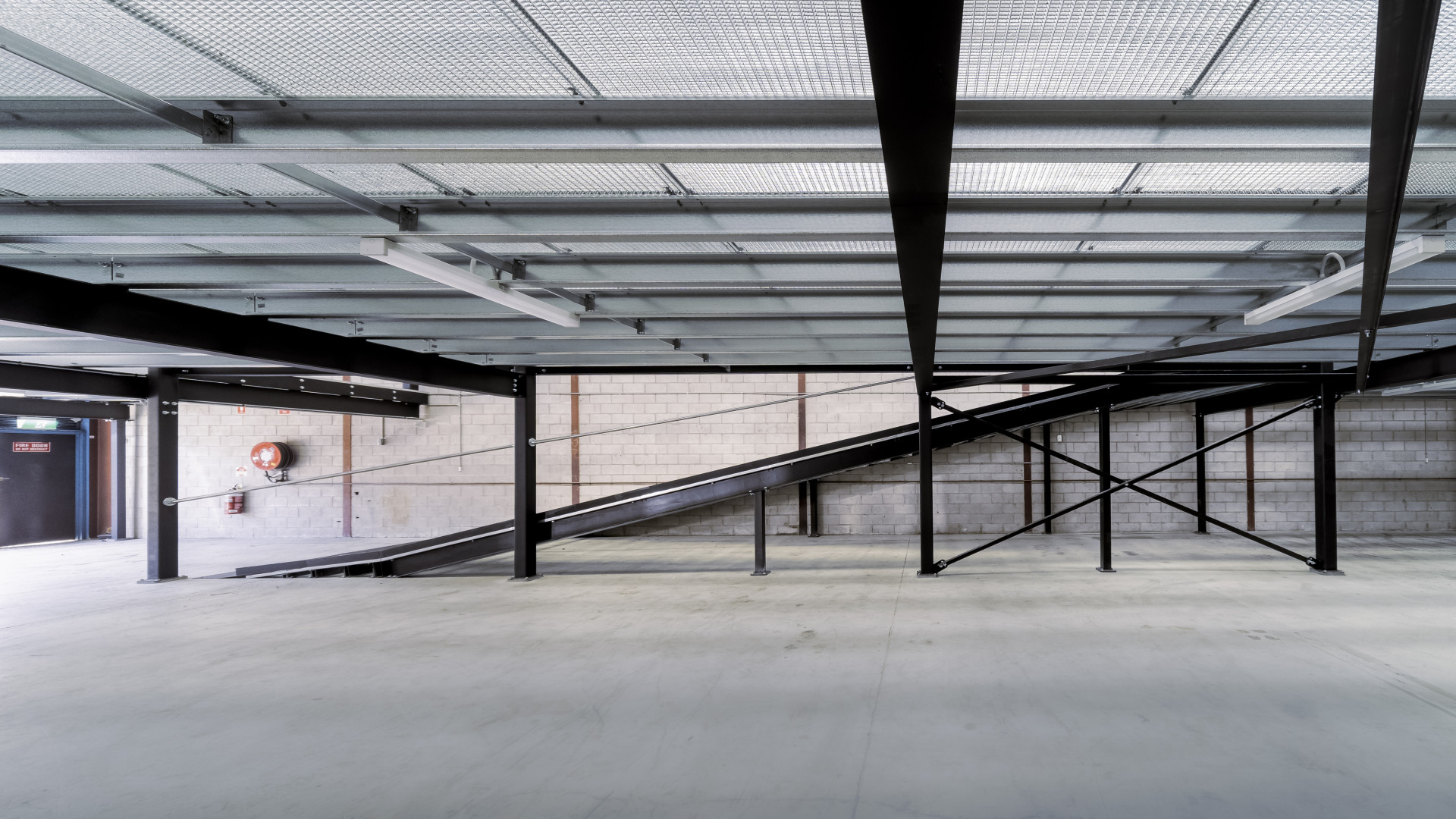
A mezzanine installed over the Christmas and New Year shutdown depends on decisions made in October. Installation is the shortest stage of the project. Design, engineering, approval, fabrication and finishing all take longer, and each one has to be complete before the site closes in late December. Working backwards from the 2026 to 2027 shutdown shows which decisions need to be locked in this month, and why a prefabricated modular system suits a short installation window.
How long a shutdown mezzanine project takes
A typical mezzanine project takes 11 to 16 weeks from site measure to handover, and on-site installation accounts for only one to two of those weeks. The table below works backwards from a handover in the week of 11 January 2027.
The shutdown is also shorter than it looks. Christmas Day falls on Friday 25 December 2026 and Boxing Day on Saturday 26 December, and Monday 28 December is an additional public holiday. New Year’s Day falls on Friday 1 January 2027. A site that closes from Thursday 24 December to Friday 8 January leaves installers around eight full working days.
|
Stage |
What happens |
Indicative duration |
Latest finish |
|
Site measure and brief |
Building measured, services recorded, operational need confirmed |
About 1 week |
Fri 16 October |
|
Concept layout |
Footprint, height, loads and access agreed, then frozen |
1 to 2 weeks |
Fri 30 October |
|
Structural engineering |
Calculations and approval drawings completed |
1 to 2 weeks |
Fri 6 November |
|
Approval or CDC |
Certifier assesses and issues approval |
2 to 3 weeks (longer for a DA) |
Fri 20 November |
|
Fabrication |
Steel cut, drilled and assembled into components |
3 to 4 weeks |
Fri 11 December |
|
Surface finishing |
Galvanising or powder coating |
About 1 week |
Fri 18 December |
|
Delivery |
Components delivered and staged |
1 to 2 days |
Wed 23 December |
|
Installation |
Frame, deck, stairs, handrails and gates |
1 to 2 weeks |
Fri 8 January |
|
Inspection and handover |
Final inspection, certification and documentation |
2 to 5 days |
Fri 15 January |
Why approvals and fabrication set the critical path
Approval and fabrication decide the finish date because neither stage can start until the design is fixed, and neither compresses easily. The certifier assesses the final engineering drawings, and the fabricator cuts and drills steel to those same drawings.
In New South Wales, many mezzanines inside existing commercial and industrial buildings can be approved through a complying development certificate (CDC). A council or accredited certifier can determine a CDC within 10 days, or 20 days where neighbour notification applies. Victoria uses a building permit from a building surveyor, and Queensland uses a building approval from a private certifier. A project that needs a full development application (DA) will usually miss January.
The applicable code also matters. NSW and Queensland have deferred adoption of NCC 2025 until May 2027, while Victoria adopted it from 1 May 2026. Confirm which edition of the National Construction Code (NCC) applies to your project before engineering starts.
A design that is still changing in November will usually miss a January handover. Each change sends drawings back through engineering, can trigger an amended approval and pushes fabrication past the point where finishing and delivery can be completed before suppliers close.
Approval pathways vary by state, council and building. Confirm the pathway for your site with a registered certifier or building surveyor before you commit to a program.
How a prefabricated modular system fits a short shutdown
A prefabricated, bolted modular system moves most of the work off site, so the warehouse keeps operating while components are engineered, fabricated and finished in the factory. On-site work is limited to setting out, bolting the frame together, fixing the deck and fitting stairs, handrails and gates. Bolted connections also reduce on-site welding and the hot work permits that come with it [verify with Unistor].
Unistor manufactures in house, and its mezzanines can be dismantled and reinstalled as requirements change, which suits operations that expect their layout to evolve. Read more about prefabricated mezzanine systems and why prefabricated mezzanines move through certification faster.
Site checks to complete before the shutdown
Site checks need to be finished in October because a problem found during installation week leaves no time to fix it. Complete these four checks before the design is frozen:
-
Slab thickness and condition. Baseplates concentrate load at each column, so confirm slab depth, strength and joint locations from drawings or core tests.
-
Existing services and sprinkler heads. Map lighting, cable trays, ducts and sprinklers. A new deck can block existing sprinkler coverage and may need new heads beneath it [verify with the fire services contractor].
-
Clearances. Check column positions against racking, forklift aisles, head height above and below the deck and egress paths.
-
Delivery access. Confirm truck access, a laydown area and forklift or crane hire, as hire companies run reduced fleets over the holidays.
Book certifiers, electricians and fire contractors with the mezzanine
Book the trades that sign off the new level at the same time as the mezzanine, because many close or run reduced crews between Christmas and mid-January. If any one of them is unavailable, the structure sits finished but unusable.
-
An electrician installs lighting beneath and on the deck, emergency and exit lighting and any new power, then issues a certificate of compliance.
-
A fire services contractor modifies the sprinklers and manages the system impairment with your insurer.
-
The certifier needs a confirmed inspection slot in the first week back.
Galvanisers and steel distributors also close over the break, so surface finishing needs to be complete before the shutdown starts [verify with Unistor].
Plan the first week back before anyone uses the new level
People and stock stay off the new level until the final inspection, certification sign-off and occupancy approval are complete. Book each of these for the first week back so the program does not stall in January.
The occupancy document depends on the state. Examples include an occupation certificate in New South Wales or a certificate of final inspection in Victoria [verify with the certifier]. Handover documentation should include engineering certification, load rating signage, as-built drawings and an inspection schedule. See what a mezzanine project handover pack should contain.
What to do if October has already passed
If the design cannot be frozen in October, phase the project instead of compressing it. Use the shutdown for enabling works such as slab repairs, services relocations, racking moves and sprinkler and electrical preparation. Then install the main structure in a planned low-activity period after the peak season [verify with Unistor]. Read how phased mezzanine installation protects warehouse uptime.
Your October decision checklist
Lock in these decisions in October to have a working, certified mezzanine in January:
-
Complete the site measure and operational brief.
-
Freeze the concept layout, including footprint, height, design loads, stairs and pallet gates.
-
Confirm the approval pathway and NCC edition with a certifier.
-
Sign off the engineering drawings for lodgement.
-
Place the order to secure fabrication and finishing slots.
-
Finish the slab, services, sprinkler and clearance checks.
-
Book the electrician, fire services contractor and final inspection.
-
Book delivery access and forklift or crane hire.
-
Set the inspection and handover date for the first week back.
Unistor can help you turn this checklist into a program for your site, starting with a site assessment this month. A specialist will review your slab, services, clearances and access. They will then confirm the approval pathway with you and map out the design, fabrication and installation dates needed for a January handover. With more than thirty years of experience and in-house manufacturing, the team manages each stage from concept to certification as one point of contact. Call 1300 137 220 or send an enquiry to secure a place in the shutdown schedule while October decisions are still possible.