

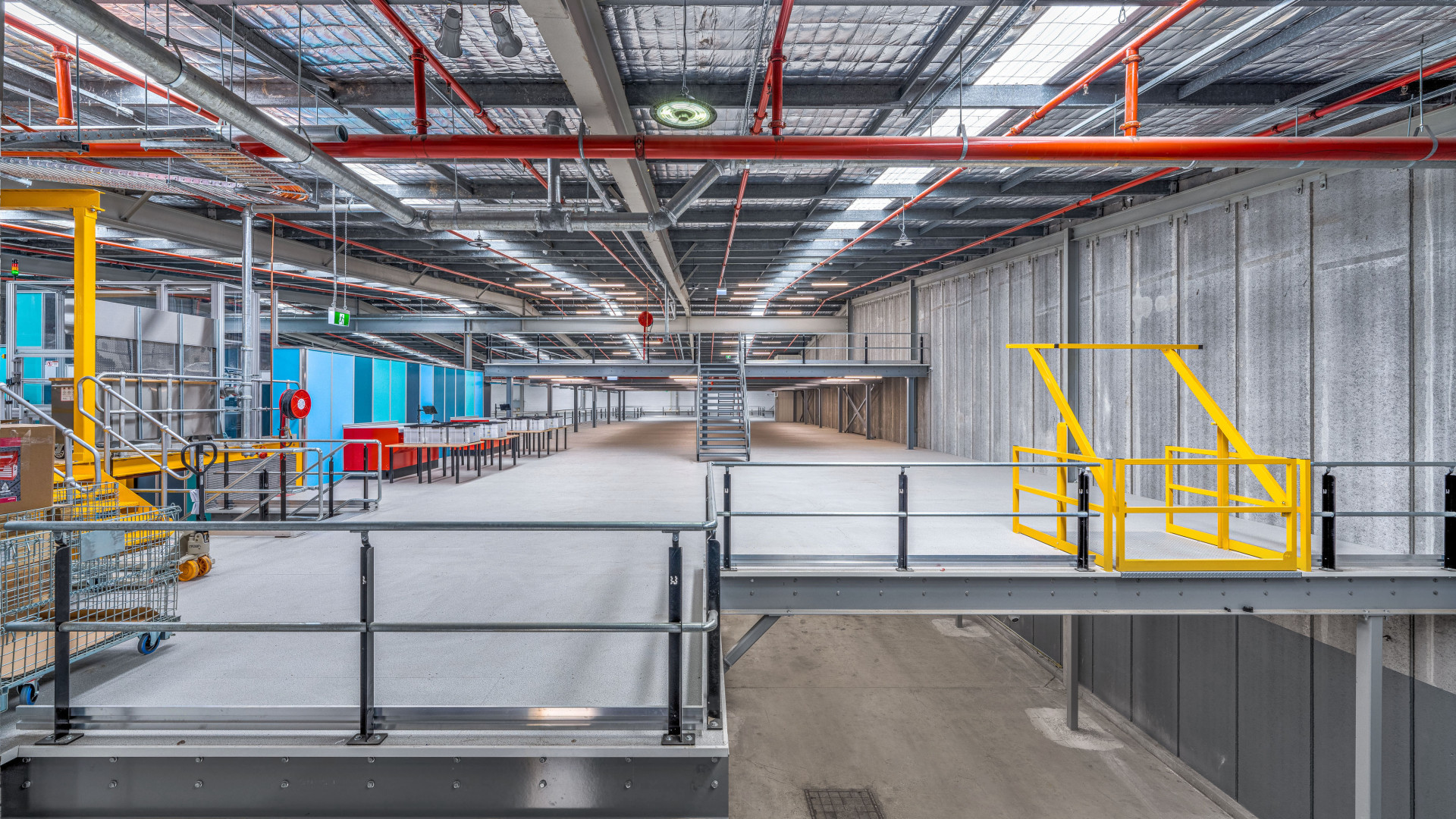
Prefabricated mezzanines move through engineering certification and building approval faster than site-built structures because the verification work is completed in the factory rather than in the field. For project managers and architects planning a warehouse, logistics or manufacturing fit-out, that difference often decides whether the facility opens on schedule. The speed advantage is not a marketing position. It sits in the certification pathway itself, in how each type of structure is engineered, documented and inspected before sign-off is issued.
The certification pathway for mezzanines in Australia
Every mezzanine floor installed in an Australian workplace is assessed against the same core framework, regardless of how it is built. The design standard is AS 1657:2018, which sets the requirements for fixed platforms, walkways, stairways and ladders. The National Construction Code governs the building approval, a registered structural engineer signs off the design, and a private certifier or Principal Certifying Authority manages the approval. In Queensland, that sign-off is captured on Form 15 and Form 16, with equivalent instruments used in New South Wales, Victoria and Western Australia. Both prefabricated and site-built structures follow this pathway. What differs is how much verification each approach demands along the way.
Why prefabrication produces a repeatable, certifiable product
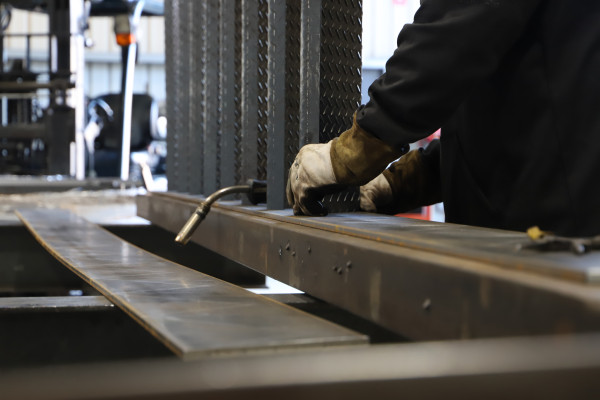
Prefabrication compresses certification because the certifier is assessing a known product against known engineering. Unistor components are engineered, welded and load-tested in a controlled factory environment. Weld procedures are documented, welders are qualified against those procedures, tolerances are calibrated and materials are traceable through mill certificates. Because each column, beam, baseplate and stair module is built to a repeatable specification, the structural performance is established before the components reach site. A certifier can complete much of the assessment from drawings and factory records alone, which shortens the review cycle from the first submission.
Why site-built mezzanines trigger more intensive inspection
Site-built structures shift the verification effort from the factory to the field. Welds, connections and tolerances are established on site under variable conditions, so the certifier has no factory record to rely on and must verify the structure as it is built. That usually means witnessed connections, on-site weld testing and multiple in-progress inspections before sign-off is issued. Each of these steps creates a scheduling dependency between the certifier, the fabricator and the builder. Any delay to one step delays the next, and the approval loop stretches accordingly.
How the standard component library shortens the design and approval loop
A standard component library removes much of the design and drawing effort that slows down first-issue approvals. Unistor's prefabricated mezzanine floors draw from a catalogue of columns, beams, baseplates, staircases and handrails that already carry engineering justification and pre-approved connection details. Designers do not need to work up new connection details for every project, and certifiers recognise the components from previous approvals. The result is fewer requests for information, faster turnaround on drawing revisions and a first-issue package that arrives closer to final. For the project team, this reduces technical risk before construction even begins.
What faster certification means for the project programme
Weeks gained in certification usually translate directly into weeks of earlier operation for the client. Mezzanine approval commonly sits on the critical path of a fit-out programme, which means time saved in engineering sign-off is not absorbed by float elsewhere in the schedule. When a certifier can approve a Unistor package in a fraction of the time required for a comparable site-built structure, the client operates the facility sooner. That converts into storage capacity used earlier, throughput realised earlier and rent or revenue recovered earlier. Framed in commercial terms, the certification advantage is a measurable return, not an abstract benefit.

As-built documentation and long-term value
A complete as-built pack protects the value of the mezzanine long after installation. Unistor delivers general arrangement drawings, load ratings, engineering certification, weld and material records, component schedules and maintenance guidance as a structured package at handover. That documentation simplifies future workplace inspections, supports staged expansion of the industrial mezzanine footprint, and provides the evidence base required for ownership changes and insurance claims. Site-built structures rarely carry the same standard of documentation, and reconstructing it retrospectively is expensive. Prefabricated systems make the paper trail part of the deliverable rather than an afterthought.
Setting realistic programme expectations
The certification advantage is real, but capturing it requires planning it into the programme from the start. Project managers and architects who want to realise the time saving should build the prefabricated pathway into the critical path at concept stage, engage the certifier early with the standard component library, and reserve a defined approval window rather than an open-ended one. Communicating the mechanism to clients and contractors also matters. When the delivery team understands that the speed advantage comes from factory-controlled fabrication and pre-approved details, expectations align with what the pathway actually delivers.

The mechanism behind the speed advantage
The speed advantage of prefabricated mezzanines is structural and procedural. Factory-controlled fabrication produces a repeatable product a certifier can assess from drawings. A standard component library carries engineering justification the certifier already recognises. A complete as-built pack closes out the approval with documentation the client can use for years. The pathway is not shortened by skipping steps. It is shortened because there is less to verify in the field, and because the verification that remains is anchored in evidence prepared before the components leave the factory. For any project measured on handover dates, that is a compliance advantage worth designing in from the start.
Speak to Unistor about a prefabricated mezzanine engineered for faster certification.