

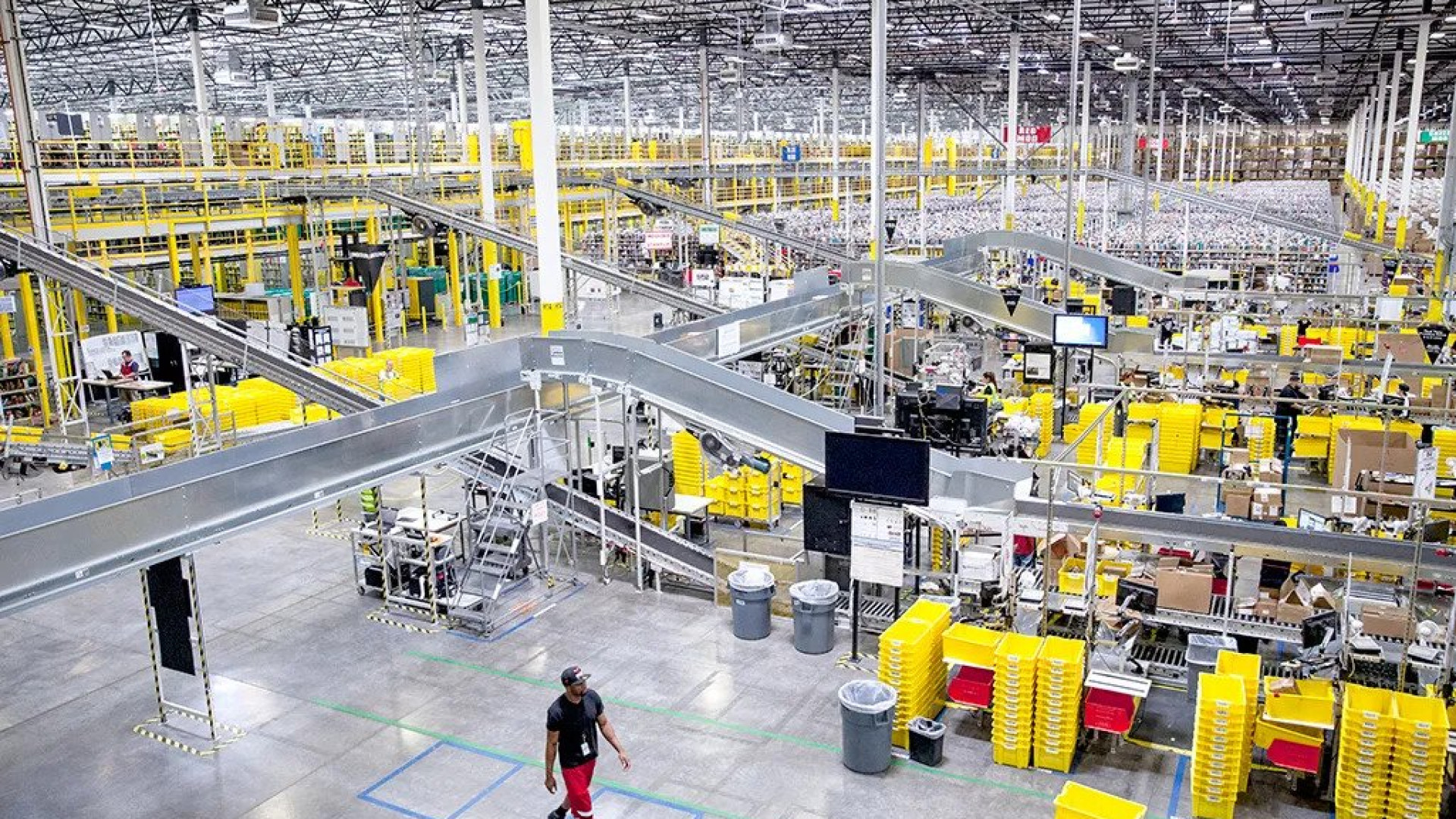
The 2026 peak season is the best evidence your operation will have for planning peak 2027 capacity. According to the Australia Post eCommerce Report 2026, released in March 2026, Australians spent a record $82.6 billion online in 2025, up 14% on the year before. In November 2025, the Australian Retailers Association (ARA) and Roy Morgan forecast a record $6.8 billion for the Black Friday to Cyber Monday weekend alone.
Operators who record the right numbers between Click Frenzy and Boxing Day can make their space decisions for peak 2027 on evidence. Without that record, the decisions rest on memory.
Why this peak is for measurement
A mezzanine cannot be designed, approved, fabricated and installed before this peak. Black Friday falls on 27 November 2026 and Cyber Monday on 30 November, only weeks away.
The most valuable action this month is deciding what to measure and who records it. Start with a baseline week in October, before volumes climb, so every peak figure can be compared against normal trading.
Capacity signals to record during peak
Record five signals from the start of Click Frenzy to the end of Boxing Day trading. Australia Post lists the Click Frenzy Main Event for 12 November 2026.
|
Signal |
What to record |
Frequency and unit |
What it shows |
|
Pick face congestion |
Picker wait time and aisle blockages |
Per shift, minutes and count |
Whether pick areas are too dense |
|
Pack bench queue times |
Time from pick completion to pack start |
Per shift, minutes per order |
Whether packing capacity is short |
|
Overflow stock locations |
Pallets or cartons held outside slotted locations, and where |
Daily, pallet count |
How much space is missing |
|
Dock and staging overflow |
Staging lane overflow and trailers waiting |
Daily, hours and count |
Whether outbound space is short |
|
Temporary labour and overtime |
Extra headcount and overtime hours |
Weekly, people and hours |
What congestion costs in labour |
Photograph overflow locations at the same time each day. A photo record shows exactly where space ran out.
Which bottlenecks a mezzanine can solve
Each bottleneck needs a cause before it needs a solution, because some peak problems are floor area shortages and others are process problems.
|
Symptom |
Likely cause |
Floor area problem? |
Better response |
|
Growing pack bench queues |
No room to add benches |
Yes |
Move or add pack benches on a mezzanine |
|
Consumables blocking aisles |
No dedicated storage |
Yes |
Store consumables on a mezzanine |
|
Slow movers occupying ground-level pick faces |
Slotting and space |
Partly |
Move slow movers up and reslot fast movers |
|
Crowded amenities with temporary staff |
Amenity space |
Yes |
Amenities on a mezzanine |
|
Pickers waiting in fast-moving aisles |
Slotting or wave planning |
No |
Reslot and adjust pick waves |
|
Trailers queuing at the dock |
Carrier scheduling |
No |
Booked carrier slots and staging rules |
Pack benches, consumables, slow-moving pick faces and amenities are the problems a mezzanine solves. Picking and dock queues usually need process or automation changes.
Plan in cubic metres, not square metres
Plan capacity in cubic metres because most fulfilment floors use only the bottom few metres of a building’s clear height. That matters while leasing extra space stays difficult. CBRE reported national industrial and logistics vacancy of 3.2% in its first-half 2026 report, released in July 2026, and expects it to stay below 4%.
As an illustrative example, a 1,000 m² packing zone under a 10 m clear height holds 10,000 m³ of space. If packing activity uses the bottom 3 m, around 70% of that volume sits empty. A mezzanine over the same zone puts that unused height to work.
To size the gap, convert peak overflow into volume. If overflow averaged 120 Australian standard pallets (1165 x 1165 mm) a day, that is around 163 m² of floor before aisles. Use the Unistor warehouse efficiency calculators to test your own figures.
Turn peak data into a mezzanine brief
Peak data becomes a mezzanine brief once it answers four questions:
-
Required area. How many square metres of pack benches, consumables, slow-moving stock or amenities need to move up a level.
-
Floor load class. What the deck must carry, expressed in kilopascals (kPa) under AS/NZS 1170.1 [verify with Unistor engineering].
-
Goods movement between levels. Whether stairs, pallet gates, lifts or conveyors move stock and cartons between levels.
-
Conveyor interface points. Where conveyors cross or land on the structure, which affects column positions and deflection limits.
See how fulfilment centres separate pick, pack and dispatch across levels and how conveyor support structures integrate with a mezzanine.
Work back from peak 2027
The new level needs to be installed and certified before the peak 2027 build-up begins in October. That points to an indicative project start by the end of March 2027.
|
Period |
Milestone |
|
January 2027 |
Analyse peak data against the baseline week |
|
February 2027 |
Site measure, concept layout and capital case |
|
March 2027 |
Design freeze and budget approval |
|
April to May 2027 |
Engineering and approval |
|
June to July 2027 |
Fabrication and finishing |
|
July to August 2027 |
Installation, phased around trading |
|
September 2027 |
Certification, handover and reslotting |
Approval requirements vary by state and council. Confirm the pathway for your site with a registered certifier.
Compare temporary space with a permanent mezzanine
Compare both options as a cost per cubic metre per year rather than a single peak bill.
Temporary responses carry costs that recur every peak:
-
Overflow storage fees
-
Shuttle transport between sites
-
Double handling of stock
-
3PL overflow charges
A mezzanine carries a one-off capital cost spread over the years you expect to occupy the site. A mezzanine floor cost depends on area, load class and access requirements.
A temporary arrangement is the stronger choice when a spike is one-off, demand is uncertain or a lease ends soon. Unistor mezzanines can also be dismantled and reinstalled, which reduces the risk of a shorter lease.
Plan peak 2027 with Unistor
Bring your peak data to Unistor in January, and the team will help you turn it into a sized, costed brief for peak 2027. A specialist will review your bottleneck records, confirm which problems more floor area can solve and map the project dates needed to finish before the build-up begins. Send an enquiry, or call 1300 137 220.