

Mining and resources facilities put different demands on a mezzanine floor than a metropolitan warehouse does. Mine site warehouses, exploration logistics facilities and resources sector supply depots store heavy parts, house high-value equipment maintenance work and operate in remote or harsh conditions where a structure needs to perform for years without close attention. Structural design, corrosion protection, flooring choice and delivery logistics all need to reflect that reality rather than a standard warehouse specification. This article sets out what changes when a mezzanine is built for a mining or resources logistics facility, and why prefabricated modular systems have become the practical answer for remote delivery.
The operational profile of a mining logistics facility
A mining logistics facility typically combines several functions under one roof. Large and heavy parts storage takes up significant floor space, high-value equipment maintenance areas need clear access and load capacity of their own, and shift crew facilities such as break rooms and amenities sit alongside the operational areas. These facilities also tend to operate in remote or harsh conditions, where a structure needs to be rugged and low maintenance because frequent repair or replacement is rarely practical. Downtime at a mining logistics facility carries a real cost, since parts and equipment access often sits on the critical path for keeping mining or exploration operations running. A mezzanine designed for this environment has to support all of these functions without becoming a maintenance burden itself.
Structural requirements for mining mezzanines
Heavy point loads from parts storage place greater demands on the frame of a mining mezzanine than the more evenly distributed loads typical of general warehouse racking. Forklifts operating at height add dynamic load on top of that static weight, since the frame has to account for movement and impact rather than a fixed, settled load. Remote facilities add a further consideration. Maintenance and inspection access is often infrequent, so a mezzanine in this setting generally warrants larger safety margins built into the original design rather than relying on regular monitoring to catch problems early. A structure specified with tighter margins to save on upfront cost can end up costing more once a load or usage pattern changes and remedial work is needed in a location that is difficult to reach. Exact load ratings and safety margins depend on the specific site and operation, and need confirmation from a structural engineer before construction begins.
Corrosion protection in mining environments
Dust, humidity, chemical exposure and ultraviolet light all accelerate the deterioration of structural steel, and mining environments often combine several of these factors at once. Open-sided or semi-enclosed structures, common on mine sites, expose steel more directly to the weather and airborne particles than an enclosed warehouse would. Coating specification needs to account for the specific combination of exposures at a given site, rather than defaulting to a standard warehouse coating that was never tested against those conditions. Under-specifying protective coating is a common false economy on remote sites, since recoating or replacing corroded steel later, including transport and access costs, generally costs far more than specifying the right system at the outset. Exact coating systems and expected service life should be confirmed by Unistor for each project.
Flooring selection for mining mezzanines
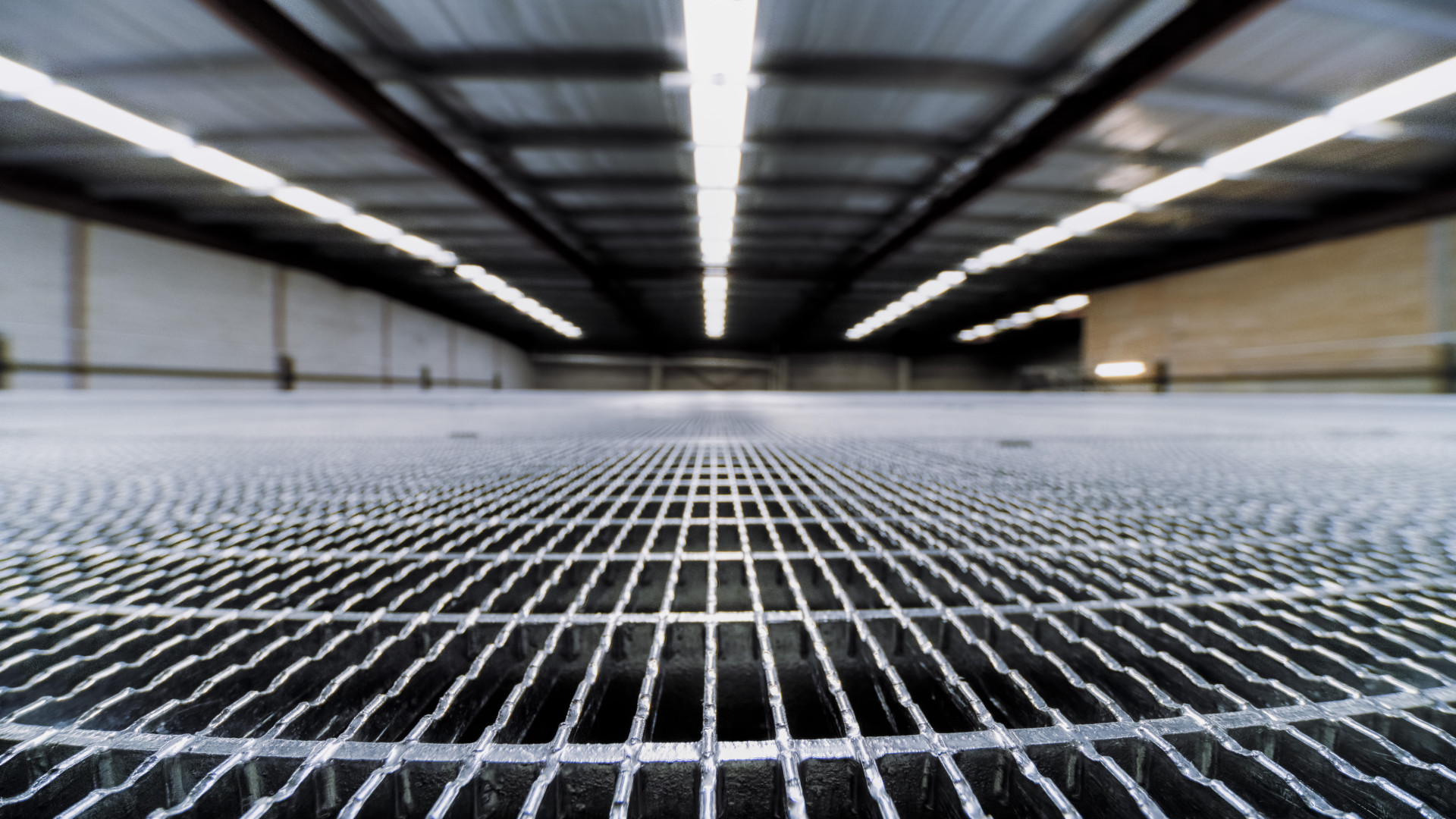
Flooring choice on a mining mezzanine comes down to whether the space is open-sided or enclosed. Meiser grating suits open-sided facilities well, since its open structure allows drainage and ventilation while still carrying heavy loads, which matters where dust and fumes need to clear rather than settle. Sealed composite decking suits enclosed crew facilities and parts rooms, where a solid, contained surface matters more than airflow and comfort underfoot is more relevant to daily use. Choosing between the two depends on what the space is used for and how exposed it is, rather than a single default specification applied across the whole facility. Many mining logistics facilities use both, specifying Meiser grating across open parts storage and maintenance bays while reserving sealed decking for enclosed crew areas within the same structure.
Prefabricated mezzanine systems for remote sites
Factory fabrication moves the bulk of the skilled labour, welding, cutting and precision assembly, off site and into a controlled environment before anything reaches the mine site itself. That shift matters most in remote locations, where tradespeople are scarce and the cost of bringing them to site, including travel time, accommodation and lost productivity elsewhere, can outweigh the cost of the structure itself. A prefabricated system arrives largely complete, needing assembly rather than construction, which reduces both the skilled labour required on site and the time the site spends without the structure it needs. Quality control also improves under factory conditions, since welds and fixings can be inspected in a controlled setting rather than checked under time pressure on an active mine site.
Transport and logistics of prefabricated components to remote sites
Modular mezzanine systems are designed with transport in mind from the start. Components are sized and packaged for flat-pack shipping, so they travel efficiently by road or rail to locations that may be hours from the nearest major depot. That same design approach supports rapid assembly once components arrive, since parts are engineered to bolt together on site rather than requiring on-site fabrication or specialist welding equipment. A small crew can typically complete assembly in a fraction of the time a site-built structure would take, which matters where every day of site downtime carries a cost and where flying additional labour to site adds further expense on top of wages.
Compliance considerations for mining site facilities
Mining site facilities sit within state-specific work health and safety (WHS) regulations in addition to the general requirements of AS 1657:2018 Fixed platforms, walkways, stairways and ladders, design, construction and installation. Unistor structures its certification documentation, including drawings, load ratings and compliance records, to align with what the safety management system at a mine site requires when a new structure is introduced. Specific state WHS requirements vary by jurisdiction and should be confirmed for the relevant state rather than assumed to be uniform across the country. A site-specific WHS assessment remains the responsibility of the safety team or adviser engaged by the client, with Unistor documentation supporting that process rather than replacing it, and complete documentation from the outset makes that assessment considerably faster to complete.
Specifying a mezzanine for a mining or resources site? Talk to the Unistor team about a structure built for remote conditions and heavy operational demand.