

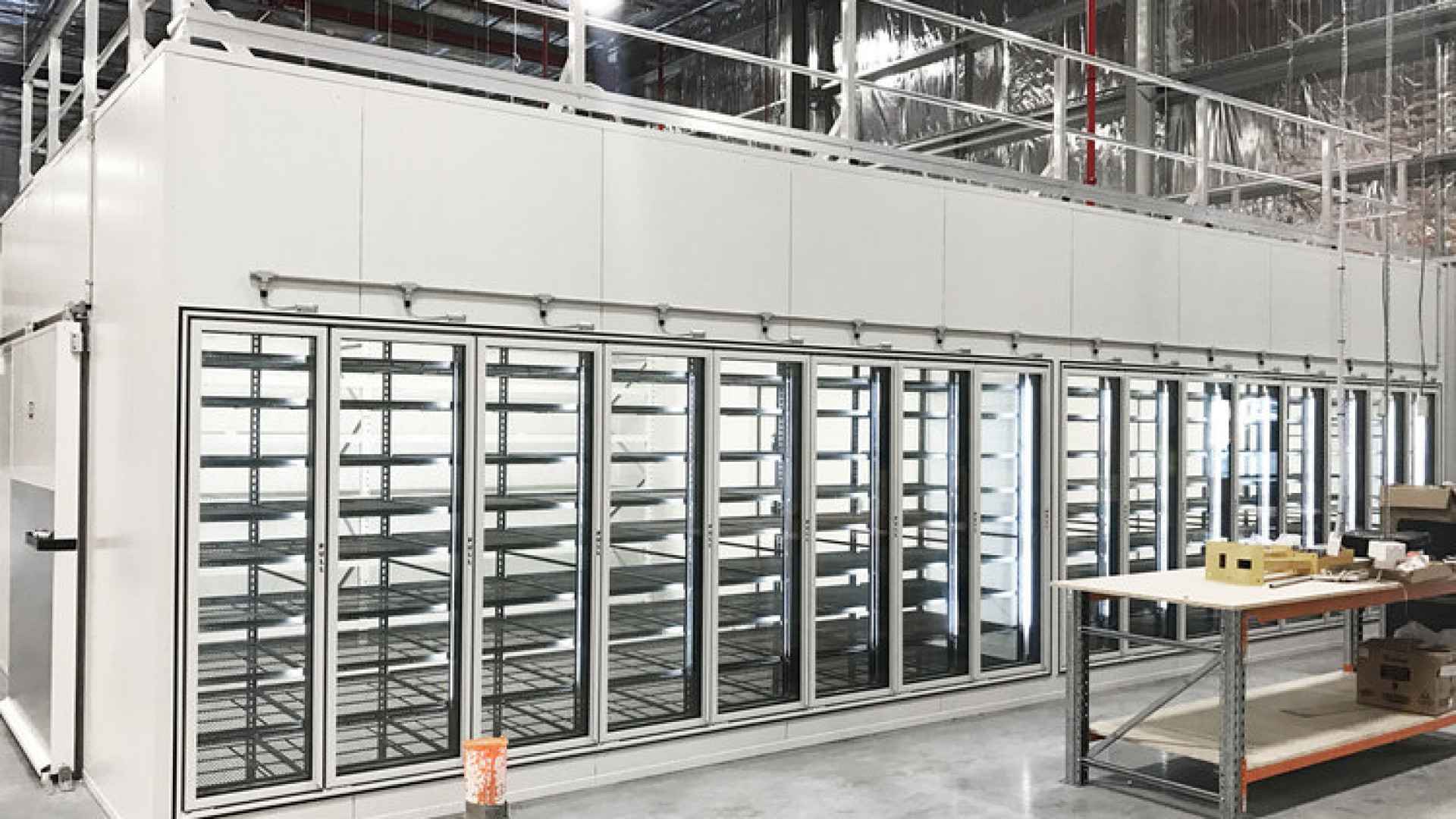
A mezzanine installed in or above a chemical storage environment carries a compliance obligation that is substantively different from that of a standard warehouse structure. The structural design, flooring specification, drainage layout, ventilation interface and access control measures are all shaped by dangerous goods regulations, Australian Standards and, in many cases, the conditions of a state-issued dangerous goods storage licence. Treating a chemical storage mezzanine as a standard fit-out item and addressing the chemical-specific requirements retrospectively is one of the most reliable ways to trigger costly redesign, licensing delays or a stop-work notice.
Unistor designs and installs mezzanine structures for chemical and pharmaceutical facilities with these requirements built into the project scope before the first drawing is produced.
Structural requirements under AS 1657:2018 in hazardous areas
AS 1657:2018 sets the minimum requirements for fixed platforms, walkways, stairways and ladders in all environments, including those involving hazardous chemicals. In a chemical storage context, those minimums interact with additional regulatory requirements that constrain material selection, drainage design and structural configuration in ways that do not arise in a standard warehouse project.
The structural requirements specific to chemical environments include:
-
Load ratings must account for the weight of personnel wearing personal protective equipment, chemical containers and any handling equipment that operates on the mezzanine level, including trolleys, drum lifters and pallet jacks. A standard warehouse mezzanine load calculation that does not account for this equipment will understate the design load.
-
Structural materials must be chemically compatible with the substances stored in the facility. Mild steel corrodes rapidly in environments where corrosive vapours or liquid spills are present. Stainless steel, hot-dip galvanised steel or chemically resistant coatings may be required depending on the specific substances stored and their concentrations.
-
Connections and fixings must be specified to resist chemical attack. In Class 8 dangerous goods environments storing corrosive substances, standard fasteners degrade at a rate that compromises structural integrity over time. Material selection for connections is as important as material selection for primary structural members.
-
Deflection limits in chemical environments may be more restrictive than in standard warehouse structures. Where spill containment relies on controlled drainage to a sump, excessive deflection in the mezzanine deck can compromise the drainage gradient and allow spilled liquid to pool in unintended locations rather than flowing to the containment outlet.
-
Surface finishes on structural members must be assessed for compatibility with the cleaning and decontamination procedures used in the facility. Some chemical-resistant coatings are incompatible with the solvents used in routine cleaning, which causes them to degrade and expose the base material to chemical attack.
Material compatibility is substance-specific and must be assessed by a structural engineer with experience in chemical storage environments. General material recommendations do not substitute for project-specific assessment against the actual substances stored.
Chemical segregation under AS 1940:2017 and its effect on mezzanine layout
AS 1940:2017 governs the storage and handling of flammable and combustible liquids in Australia and sets requirements for separation distances between storage zones, ignition sources and incompatible substances. These requirements directly constrain the layout and positioning of a mezzanine in any facility storing flammable or combustible liquids, and they must be addressed before the mezzanine design is finalised.
A mezzanine positioned above or adjacent to a flammable liquids store introduces new physical elements into the storage environment: the deck structure itself, the access stairway, edge protection, columns and any equipment or substances stored or handled on the upper level. Each of these elements affects the segregation distances available within the facility. A column positioned to optimise the structural span of the mezzanine may fall within a required separation distance. A stairway positioned for convenient access may introduce a pedestrian path through a zone that AS 1940:2017 requires to be kept clear of ignition sources.
An overhead mezzanine deck also affects the natural ventilation patterns within the storage zone below. AS 1940:2017 requires that flammable liquids storage areas are ventilated to prevent the accumulation of flammable vapour to concentrations above twenty-five percent of the lower explosive limit. A mezzanine deck that restricts airflow through the storage area may reduce the effectiveness of the existing ventilation system and require mechanical ventilation to be introduced or upgraded before the mezzanine can be approved for use. This is not a minor modification; retrofitting mechanical ventilation to an operating dangerous goods store is a significant engineering and licensing undertaking.
Where a mezzanine is used to create an upper-level storage zone in a facility that also stores chemicals on the ground floor, the substances stored on the upper level must be assessed for compatibility with those stored below and adjacent. Incompatible chemical classes must be segregated by physical separation or by the separation distances specified in AS 1940:2017 and the Australian Dangerous Goods Code. Vertical separation by a mezzanine deck does not automatically satisfy the segregation requirement if liquid spills, vapour transfer or drainage pathways create a route for incompatible substances to come into contact.
AS 1940:2017 should be read alongside the Australian Dangerous Goods Code and any applicable state dangerous goods licensing conditions, which may impose requirements beyond the minimum standard. Engage a dangerous goods consultant or engineer for substance-specific segregation advice before the mezzanine layout is fixed.
Spill containment and bunding requirements
Bunding is a physical barrier system designed to contain chemical spills within a defined area, preventing contamination of drainage systems, soil or adjacent storage zones. In chemical storage facilities, bunding requirements are set by AS 1940:2017, state environmental protection legislation and dangerous goods licensing conditions. A mezzanine installed above a chemical storage zone creates a vertical pathway through which spilled liquids can travel, and the flooring specification must account for this from the outset.
The spill containment requirements that affect mezzanine design include:
-
Open-mesh grating allows liquid to pass directly through the deck. Where a mezzanine is positioned above a bunded chemical storage zone, open-mesh flooring may allow spills from the upper level to bypass the bunding system entirely, contaminating the storage zone below or entering drainage pathways that were not designed to handle chemical waste. Whether open-mesh flooring is acceptable depends on the substances stored on the upper level, the drainage design and the licensing conditions of the facility.
-
Where the mezzanine deck forms part of the spill containment system, solid flooring with a contained drainage outlet directed to an approved sump is required. The deck must be designed with a drainage gradient that directs spilled liquid to the outlet without pooling, and the drainage system must be sized for the maximum credible spill volume from the largest container stored or handled on the mezzanine level.
-
Where the mezzanine is positioned above but not forming part of the bunded zone, the flooring specification should still be assessed for liquid permeability and the risk of chemical drip or vapour transfer between levels. Even low-volume drips of corrosive or flammable liquid from a mezzanine level can create safety risks in the storage zone below.
-
Bunding on the mezzanine level itself may be required where chemicals are stored or decanted on the upper deck. Bund walls must be structurally integrated into the mezzanine design as part of the initial engineering scope. Bund walls added to an existing mezzanine structure after installation frequently create drainage problems, load distribution issues and conflicts with the edge protection system.
-
Drainage penetrations through the mezzanine deck must be sealed around the pipe to prevent vapour transfer between levels. Unsealed penetrations create a pathway for flammable or toxic vapour to migrate from the storage zone below to the mezzanine level above, where it may encounter ignition sources.
Flooring selection: Meiser grating versus solid composite decking
Flooring selection for a mezzanine in a chemical storage environment is a regulatory decision before it is a design or commercial one. The flooring specification must be confirmed against the dangerous goods class stored in the facility, the bunding and spill containment requirements, the ventilation design and the fire rating obligations imposed by the NCC and the facility's dangerous goods licence conditions.
The two most common mezzanine flooring options, open-mesh grating and solid composite decking, have substantially different performance characteristics in a chemical storage context.
|
Consideration |
Meiser grating (open mesh) |
Solid composite decking |
|
Spill containment |
Not suitable where the deck forms part of the bunding system; liquids pass through the mesh |
Suitable where the deck is required to contain spills; drainage can be directed to an approved sump |
|
Ventilation |
Allows vapour and airflow through the deck; beneficial where AS 1940:2017 ventilation requirements apply below |
Restricts airflow through the deck; mechanical ventilation may be required below the deck |
|
Anti-static performance |
Available in earthed configurations; suitability depends on area classification and substance stored |
Anti-static surface options available; continuous earthing path required regardless of surface type |
|
Corrosion resistance |
Galvanised or stainless steel options available for corrosive environments; specify based on chemical class |
Composite options resistant to a broader range of chemical exposures; substrate compatibility is material-dependent |
|
Fire rating |
Non-combustible steel construction; does not contribute to the building fire load |
Combustibility varies by material; must be assessed against NCC fire rating requirements for the building class and dangerous goods licence conditions |
|
Drainage gradient |
Natural drainage through mesh; no deck gradient required |
Gradient must be incorporated into the structural design; increases engineering complexity |
|
Regulatory suitability |
Appropriate where spill containment is not required at deck level and ventilation is a design priority |
Required where spill containment, controlled drainage or fire rating requirements preclude open-mesh flooring |
Unistor's mezzanine floor systems include both Meiser grating and solid decking options like ResinDek. The specification for each project is confirmed against the regulatory requirements of the facility rather than selected on a default basis. Neither option is universally appropriate in a chemical storage environment, and the decision must be made with reference to the specific substances stored, the drainage design and the ventilation system.
Ventilation and drainage considerations
Ventilation
A mezzanine deck installed above a flammable or toxic chemical storage zone changes the airflow characteristics of the space below and may reduce the effectiveness of the existing ventilation system. This must be assessed before the mezzanine design is finalised, not after installation.
-
AS 1940:2017 requires that flammable liquids storage areas are ventilated to prevent vapour accumulation above twenty-five percent of the lower explosive limit. A solid mezzanine deck creates a ceiling over part or all of the storage zone, which can create pockets where vapour accumulates and existing ventilation cannot reach.
-
The ventilation design must be reviewed by a mechanical engineer or dangerous goods consultant before the mezzanine structure is installed. The review should confirm that the new structure does not create dead zones where vapour concentration can exceed the threshold under normal or foreseeable abnormal operating conditions.
-
Where natural ventilation is insufficient after mezzanine installation, mechanical ventilation ducted below the mezzanine deck is required. All ducting, fans and electrical components installed in flammable vapour zones must be rated for use in hazardous areas under the applicable area classification standard and in accordance with AS/NZS 3000.
-
Open-mesh grating such as Meiser grating creates less restriction to airflow than solid decking and is less likely to require supplementary mechanical ventilation below the deck. This is a material advantage in facilities where the cost of mechanical ventilation upgrades is significant or where the installation of new services in a hazardous area creates additional complexity.
Drainage
Drainage from a mezzanine deck in a chemical environment must be treated as a regulated discharge pathway, not a building services detail.
-
All drainage outlets from the mezzanine deck must direct liquid to an approved sump or chemical containment system. Connection to a stormwater drain or an uncontained trade waste pathway is not acceptable where the substances handled on the mezzanine level are classified as dangerous goods or environmentally hazardous.
-
The drainage system must be sized for the maximum credible spill volume from the largest container stored or handled on the mezzanine level, not the routine volume of liquid that might be present during normal operations.
-
Drainage penetrations through the mezzanine deck must be sealed around the pipe using a material compatible with the chemical environment. Unsealed penetrations allow vapour to pass between levels and may also allow liquid to track along the outside of the pipe and enter the zone below outside the intended drainage pathway.
-
The drainage gradient must be incorporated into the structural engineering of the deck. A gradient applied as a screed over a flat structural deck can crack or delaminate in chemical environments, creating pooling points that are difficult to remediate without removing the deck surface.
Anti-static and anti-spark flooring in flammable goods environments
Static electricity discharge is a credible ignition risk in environments where flammable vapours may be present. In facilities storing Class 3 dangerous goods, the accumulation of static charge on flooring surfaces, personnel and equipment can create conditions for ignition if the vapour concentration in the area is within the flammable range. Anti-static flooring is one of the control measures used to manage this risk, but its effectiveness depends on correct specification and installation.
Anti-static flooring is designed to dissipate static charge to earth before it can accumulate to a discharge threshold. In mezzanine applications, this requires both an anti-static surface material and a continuous earthing connection between the flooring and the building's earthing system. Specifying an anti-static surface without a continuous and verified earthing path does not deliver the protection the specification implies. The earthing connection must be documented, tested after installation and included in the facility's ongoing inspection and testing program.
The requirement for anti-static flooring depends on the area classification of the space, which is determined by the substances stored, the quantities involved and the likelihood of flammable vapour being present under normal and abnormal operating conditions. Area classification is conducted by a competent person in accordance with the applicable standard and must be completed before the flooring is specified. A mezzanine flooring specification produced without reference to the area classification of the space it occupies cannot be confirmed as compliant, regardless of the anti-static properties of the surface material.
Anti-spark flooring addresses a different but related risk. Where the mezzanine surface may be struck by metal objects such as drum lifters, pallet jacks, dropped containers or hand tools, the flooring must resist the generation of mechanical sparks from impact or friction. Anti-spark and anti-static requirements may apply simultaneously in the same space, and the flooring specification must address both. These are not interchangeable properties; a flooring product that is anti-static is not automatically anti-spark, and vice versa. Confirm the specific requirements for the facility with a hazardous area engineer before the flooring specification is finalised.
Fire rating requirements in Class 3 dangerous goods facilities
Fire rating requirements escalate in facilities storing Class 3 dangerous goods, flammable liquids, because the fire load and the consequence of ignition are substantially greater than in a standard warehouse environment. The NCC sets minimum fire resistance level requirements for structural elements based on the building classification and fire safety system design, but in a dangerous goods facility, state-based licensing conditions may impose additional or more stringent requirements on top of those minimums.
The fire rating considerations that directly affect mezzanine design in Class 3 facilities include:
-
Structural steel in chemical storage mezzanines may require fire protection to achieve the fire resistance level specified for the building. The form of fire protection, whether intumescent coating, fire-rated board or spray-applied material, affects the surface finish, the compatibility of the structural member with the chemical environment and the maintenance requirements of the member over its service life. Intumescent coatings, for example, may not be compatible with repeated chemical exposure and may require more frequent inspection and reapplication than in a standard warehouse environment.
-
Open-mesh steel grating such as Meiser grating is non-combustible and does not contribute to the fire load of the building. This is a significant regulatory advantage in a Class 3 dangerous goods facility where controlling the fire load is a primary design objective. Solid composite decking must be assessed for combustibility and fire spread characteristics in the context of the building's fire safety system and the dangerous goods licence conditions. Combustible decking materials that are acceptable in a standard warehouse may not satisfy the fire safety requirements of a Class 3 facility.
-
Fire suppression system coverage must be reviewed when a mezzanine is installed in a dangerous goods facility. A new deck level obstructs sprinkler coverage of the storage zone below and may require additional sprinkler heads at the mezzanine level or below the deck to maintain the design coverage density. Any modification to the sprinkler system in a dangerous goods facility must be designed by a fire protection engineer and approved by the relevant authority.
-
The performance-based fire engineering assessment of the building, if one exists, must be reviewed to determine whether the mezzanine falls within the scope of the original assessment or whether a supplementary fire engineering report is required. Installing a mezzanine that is outside the scope of the original fire engineering assessment without a supplementary report may invalidate the fire safety strategy for the building.
-
Egress requirements for the mezzanine level, including stair width, maximum travel distance to an exit and emergency lighting coverage, must meet both AS 1657:2018 and the NCC requirements applicable to the building classification and occupancy. In a dangerous goods facility, emergency egress design must also account for the possibility that egress routes may be affected by a spill or fire event involving the stored substances.
Fire rating requirements are project-specific and must be confirmed with a fire engineer and the certifying authority for the building before design is finalised. Do not apply fire resistance levels from a comparable project without confirming that the building classification, fire safety system design and dangerous goods licence conditions are equivalent.
Access control and restricted area design
Access to mezzanine levels in regulated chemical storage facilities must be restricted to personnel who are trained, authorised and equipped with the appropriate personal protective equipment for the substances stored in the area. The physical design of the mezzanine must support this restriction from the outset, not rely on administrative controls alone to keep unauthorised personnel away from the hazard.
The access control requirements that form part of the mezzanine design in a regulated chemical environment include:
-
Self-closing safety gates at stair heads and mezzanine access openings are required under AS 1657:2018 where the mezzanine is used as a working platform. In a chemical storage environment, these gates also carry an access control function and must be specified to resist the chemical environment in which they operate. Standard mild steel gates in a corrosive environment will degrade and may fail to close reliably over time, compromising both the fall protection and the access control function simultaneously.
-
Lockable access points at the base of each stairway restrict access to the mezzanine level outside of authorised work periods. Where the mezzanine is used for chemical storage, lockable access also reduces the risk of unauthorised handling of dangerous goods.
-
Emergency egress must not be compromised by access control measures. Any gate or locking mechanism that restricts entry to the mezzanine level must allow unrestricted egress from the mezzanine level in an emergency. Locking mechanisms that prevent egress from the upper level are not permitted and create a direct conflict with the egress requirements of the NCC and the Work Health and Safety Act 2011.
-
Signage at all access points must identify the dangerous goods class stored in the area, the personal protective equipment required for entry, the restrictions applying to ignition sources and any specific hazards relevant to the substances stored. Signage standards must be consistent with the Australian Dangerous Goods Code and the facility's dangerous goods management plan.
-
Where the facility is subject to a dangerous goods storage licence, the access control measures required by the licensing authority may be specified as a condition of that licence. These conditions must be documented in the facility's dangerous goods management plan and incorporated into the mezzanine design scope. Access control measures that satisfy AS 1657:2018 but do not meet the licence conditions are not compliant, regardless of their structural adequacy.
-
Visitor and contractor access to the mezzanine level must be addressed in the facility's site induction procedure, not left to the discretion of individual personnel. The mezzanine design should make it physically apparent to visitors and contractors that the area is a restricted zone before they reach the stair, not only after they have climbed it.
Unistor's approach to chemical sector mezzanine projects
Mezzanine design in a chemical storage environment requires the structural design team to understand the regulatory framework before the first drawing is produced. In a standard warehouse, flooring selection, drainage design and structural material specification are largely technical decisions. In a chemical storage facility, they are compliance decisions, and the consequences of getting them wrong are not limited to performance problems; they include licence conditions, regulatory notices and liability exposure under the Work Health and Safety Act 2011.
Unistor designs and installs mezzanine structures for chemical and pharmaceutical facilities with these requirements built into the project scope from the outset. The documentation package prepared for each project covers structural certification to AS 1657:2018, flooring specification aligned to the dangerous goods class and bunding requirements of the facility, ventilation interface assessment, drainage design, and access and egress design meeting both NCC requirements and the work health and safety obligations of the facility operator.
For architects and project managers working on chemical facility projects, Unistor provides CAD-compatible structural models, connection details, load schedules and a compliance documentation pack structured to meet the requirements of building surveyors, certifying authorities and dangerous goods licensing bodies. The structural scope is managed under one program, with one project team accountable for the interface between the mezzanine design and the regulatory requirements of the chemical storage environment it serves.
A compliance framework built into the design, not added to it
The compliance requirements for mezzanines in chemical storage environments are not a layer of complexity to be managed after the structural design is complete. They are design inputs that determine the structural material, the flooring specification, the drainage layout, the ventilation interface and the access control configuration before the engineering drawings are produced. Facilities that treat these requirements as an afterthought face redesign costs, licensing delays and, in some cases, structures that cannot be approved for use in the environment they were built to serve. Engaging a design-and-build partner who addresses the chemical storage compliance framework as part of the standard project scope is the most reliable way to avoid that outcome.
Request a design consultation or talk to a mezzanine specialist to discuss the compliance requirements for your chemical storage facility.