

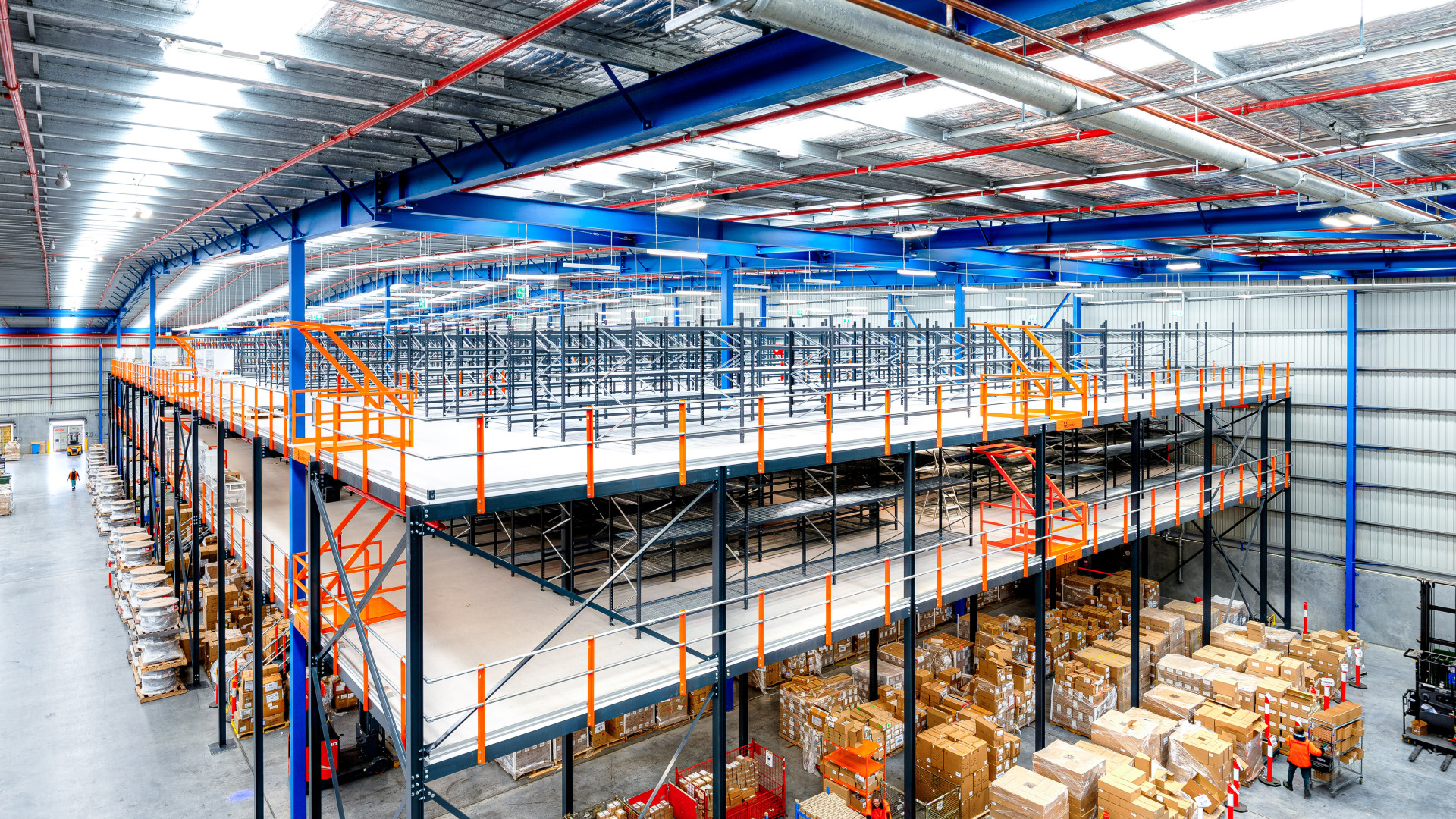
Multi-system warehouse fit-outs fail not because individual systems are poorly designed, but because they are designed in isolation. Structural engineers, racking suppliers and automation integrators each work from separate briefs, optimise for their own scope and produce drawings that have never been reconciled against each other. The clashes that result from this approach appear on site, at the point where resolving them is most expensive and most disruptive to the project program. The coordination framework that prevents these failures is not complicated, but it must be established at concept stage, not during installation.
Why isolated design creates on-site clashes
Separated procurement streams are the primary structural cause of multi-system fit-out failures. When a structural contractor, a racking supplier and an automation integrator are engaged through separate contracts with no shared interface documentation, each party designs to their own brief. The structural engineer sizes beams and slabs for the loads provided at the time of engagement. The racking supplier lays out uprights to optimise storage density. The automation integrator positions conveyors, autonomous mobile robot (AMR) paths and vertical transfer modules (VTMs) to maximise throughput. None of these decisions is made with full visibility of the others.
Three conditions consistently produce on-site clashes in this environment:
-
Structural design is locked in before automation loads and penetration requirements are defined, leaving no mechanism to incorporate late changes without triggering recertification
-
Racking layouts are finalised without reference to AMR travel paths or guarding exclusion zones, producing conflicts that require on-site rework to resolve
-
Separate contractor scopes create interface gaps where no single party takes responsibility for coordinating between structural, racking and automation design
The cost of resolving these conflicts on site, whether through redesign, additional steelwork, modified conveyor routes or delayed commissioning, is consistently higher than the cost of coordinating them at the design stage.
The three most common integration failures
Structural penetrations clashing with racking footprints
Penetrations for conveyors, cable trays and services are typically designed after the structural slab and mezzanine drawings are issued. Where racking footprints have not been mapped against penetration locations during the design phase, upright baseplates land on or immediately adjacent to penetration edges. This compromises both the racking installation and the structural integrity of the floor around the opening. The load path around the penetration is no longer as the engineer designed it, and the upright cannot be positioned as the racking layout requires. Retrofitting a penetration around an installed racking bay is costly and, in some structural configurations, not achievable without additional framing and recertification.
Mezzanine beam depths conflicting with conveyor clearances
Conveyor systems running at or near mezzanine soffit level require defined clearances between the top of the conveyor and the underside of the structural beams above. Where beam depths are not coordinated with conveyor geometry during the design phase, clearances are lost and conveyor routes must be redesigned on site. In some cases, beam profiles must be changed after fabrication, which requires the structural engineer to reissue calculations and certification before installation can continue. The program impact of this sequence, redesign, refabrication and recertification, is significant and almost entirely avoidable.
Automation fixings not accounted for in the structural design
Conveyor brackets, VTM anchor points and AMR charging station fixings all impose loads on the mezzanine deck or structural frame. Where these loads are not included in the structural brief at the design stage, the engineer cannot account for them in the load calculations, and the certified capacity of the structure does not cover them. Post-installation fixings that exceed the certified design loads require engineering review before automation commissioning can proceed. In some cases, structural remediation is required. Identifying fixing positions and loads during the design phase adds no significant cost to the structural scope. Addressing them after the structure is certified and the automation vendor is on site adds both cost and delay.
How integrated design aligns systems from concept stage
Integrated design starts with a shared brief. Before structural drawings are issued, load allowances for conveyor decks and VTMs are built into the mezzanine design, racking layouts are mapped against AMR travel paths, and penetration positions are agreed across structural, automation and services scopes. This approach does not require all vendors to be engaged simultaneously, but it does require that structural design decisions are not finalised until the interface requirements of the automation and racking systems are known.
In practice, integrated design at concept stage involves four coordinated steps:
-
Structural load allowances for conveyor decks, VTMs and AMR charging stations are included in the engineer's brief from the outset, based on loads provided by the automation vendor or, where a vendor has not yet been appointed, conservative allowances agreed with the project manager
-
Racking layouts are reviewed against automation travel paths and guarding exclusion zones before upright positions are finalised, so that conflicts are resolved on a drawing rather than on a floor
-
A penetration schedule is produced and agreed between the structural engineer, the automation integrator and the services contractor before the mezzanine structure is fabricated, so that penetration positions do not conflict with upright baseplates, beam webs or primary structural members
-
A single drawing register is maintained across all vendor scopes, so that revisions issued by one party are visible to the others and can be checked for interface impacts before they are incorporated into fabrication
Unistor's single-contract seven-stage delivery model places structural accountability with one partner across the full project lifecycle. Where separate automation vendors are engaged, Unistor coordinates interface requirements directly with their engineering teams during the design phase, so that the structural brief reflects the full scope of what the mezzanine is required to support and accommodate.
Penetration coordination: managing openings without compromising structural integrity
Penetrations through mezzanine floors for conveyors, cable trays and services are one of the highest-risk interface points in a multi-system fit-out. Each opening reduces the effective section of the floor and must be positioned and framed to maintain structural integrity under the certified design loads.
Coordinating penetrations effectively requires the following to be resolved before the mezzanine structure is fabricated:
-
Penetration locations must be agreed between the structural engineer, the automation integrator and the services contractor before fabrication drawings are issued. Changes to penetration positions after fabrication typically require new structural calculations and, in some cases, additional steelwork to reinstate the load path around the revised opening.
-
Penetration edges require trimmer steelwork or structural framing to redistribute loads around the opening. The extent of framing required depends on the size and position of the penetration relative to the primary structural grid.
-
Where conveyors pass through a mezzanine floor vertically, the structural frame must account for both the static weight of the conveyor and the dynamic loads imposed during operation. These loads must be provided by the automation vendor and confirmed by the structural engineer before the penetration framing is designed.
-
Cable tray and services penetrations carry lower structural implications than conveyor openings but must still be coordinated with the structural grid to avoid cutting through primary members or compromising fire rating requirements under the National Construction Code (NCC).
Where Meiser mezzanine gratings are specified as the floor surface, the open grid profile allows some services to be routed at floor level without full penetrations through the structural deck. This can reduce the number of penetrations required and simplify coordination with services contractors.
Guarding and edge protection for AMR zones and conveyor transfer points
Mezzanine levels that incorporate AMR travel paths or conveyor transfer points require guarding beyond the standard edge protection requirements of AS 1657:2018. Automated equipment operating on a mezzanine deck alongside personnel introduces impact, entrapment and fall risks that standard guardrail design does not address in full.
Four guarding requirements apply specifically to automated systems on mezzanine levels:
AMR exclusion zone barriers: Physical barriers delineating AMR exclusion zones on mezzanine levels must be rated to contain the impact load of the AMR at its operational speed. The structural frame must be designed to accommodate the barrier fixings and the dynamic loads they transmit under an impact event. These loads must be provided by the AMR vendor and confirmed with the structural engineer before the guarding design is finalised.
Conveyor transfer point guarding: Transfer points where product moves between mezzanine levels represent both a mechanical hazard and a fall risk from the opening in the mezzanine floor. Guarding at these points must address both risks and must be designed in conjunction with the conveyor vendor to confirm that the guarding geometry does not obstruct product flow or maintenance access.
Combined personnel and AMR environments: Where personnel and AMRs share a mezzanine level, physical guarding and electronic exclusion zones typically operate in combination. The structural design must support the physical guarding, and the guarding layout must be coordinated with the AMR vendor's safety system specifications to confirm that physical and electronic boundaries are consistent.
Post-handover modifications: All guarding installed as part of a mezzanine structure forms part of the certified installation. Any modification to guarding after handover, including repositioning barriers to accommodate an AMR path change, requires engineering review to confirm that the original structural certification remains valid.
Installation sequencing: why structural certification must precede automation commissioning
The order in which structural and automation work is completed is a project management requirement with direct safety and contractual implications. Automation vendors cannot safely commission equipment on a mezzanine structure that has not been certified and formally handed over by the structural contractor.
The following sequencing principles apply to all multi-system fit-outs involving mezzanines and automation:
Structural completion before automation installation: The mezzanine frame, flooring, stairs, guarding and all penetration framing must be completed, inspected and certified by a registered structural engineer before automation equipment is installed on the deck. Installing automation on an uncertified structure exposes the project to safety risk and creates ambiguity about whether the structural certification, when issued, covers the as-installed condition.
Handover documentation before commissioning: The structural handover pack, including as-built drawings, engineering certification and load rating signage, must be available to the automation vendor before commissioning begins. This documentation confirms the certified load capacity of the deck, the positions and load ratings of all designated fixing points, and the clearances available for conveyor routing and AMR travel.
Progressive handover for overlapping programs: Where racking installation and automation installation overlap on the program, certified handover zones can be established so that structural work in one area is completed and handed over progressively. This allows automation commissioning to begin in certified zones while structural work continues in adjacent bays, without either scope creating risk for the other.
Fixing schedule compliance: Any automation fixing that deviates from the pre-agreed fixing schedule must be reviewed by the structural engineer before installation proceeds. A fixing installed in a position or at a load that differs from the certified design may invalidate the structural certification for the affected area and require the engineer to reissue calculations before commissioning can continue.
Project manager checklist: multi-system warehouse fit-out
Design coordination
-
Structural brief includes load allowances for all conveyor decks, VTMs and AMR charging stations, based on loads confirmed by the automation vendor
-
Penetration schedule agreed between structural engineer, automation integrator and services contractor before fabrication drawings are issued
-
Racking layout mapped against AMR travel paths and guarding exclusion zones before upright positions are finalised
-
Mezzanine beam depths coordinated with conveyor clearance requirements at design stage
-
AMR exclusion zone barrier loads confirmed with AMR vendor and provided to structural engineer
-
Guarding design coordinated with AMR vendor safety system specifications
-
Single drawing register maintained across all vendor scopes with a revision control protocol
Pre-installation
-
Structural fabrication drawings reflect agreed penetration positions and fixing schedules
-
Racking upright positions confirmed clear of all penetrations, conveyor routes and AMR travel paths
-
Automation fixing schedule issued to structural engineer for review and sign-off before fabrication
-
Installation sequence agreed with all vendors, with certified handover zones mapped to the project program
Handover
-
Structural engineering certification and as-built drawings issued before automation commissioning begins in each zone
-
Load rating signage installed and visible on the mezzanine deck
-
All guarding confirmed as part of the certified structural scope and inspected before personnel or automated equipment access the deck
-
Any post-installation fixing variations reviewed and approved by the structural engineer before commissioning proceeds in the affected area
Projects that coordinate structural, racking and automation scope from concept stage avoid the on-site clashes, program overruns and rectification costs that isolated design consistently produces. The earlier interface requirements are established and shared across all vendor scopes, the lower the cost of resolving conflicts and the more predictable the commissioning sequence. If you are planning a multi-system warehouse fit-out, the most valuable investment in the early stages of the project is coordination, not speed.
Talk to a mezzanine specialist
Get your structural and automation design aligned from the start. Talk to the Unistor team about your fit-out requirements.