

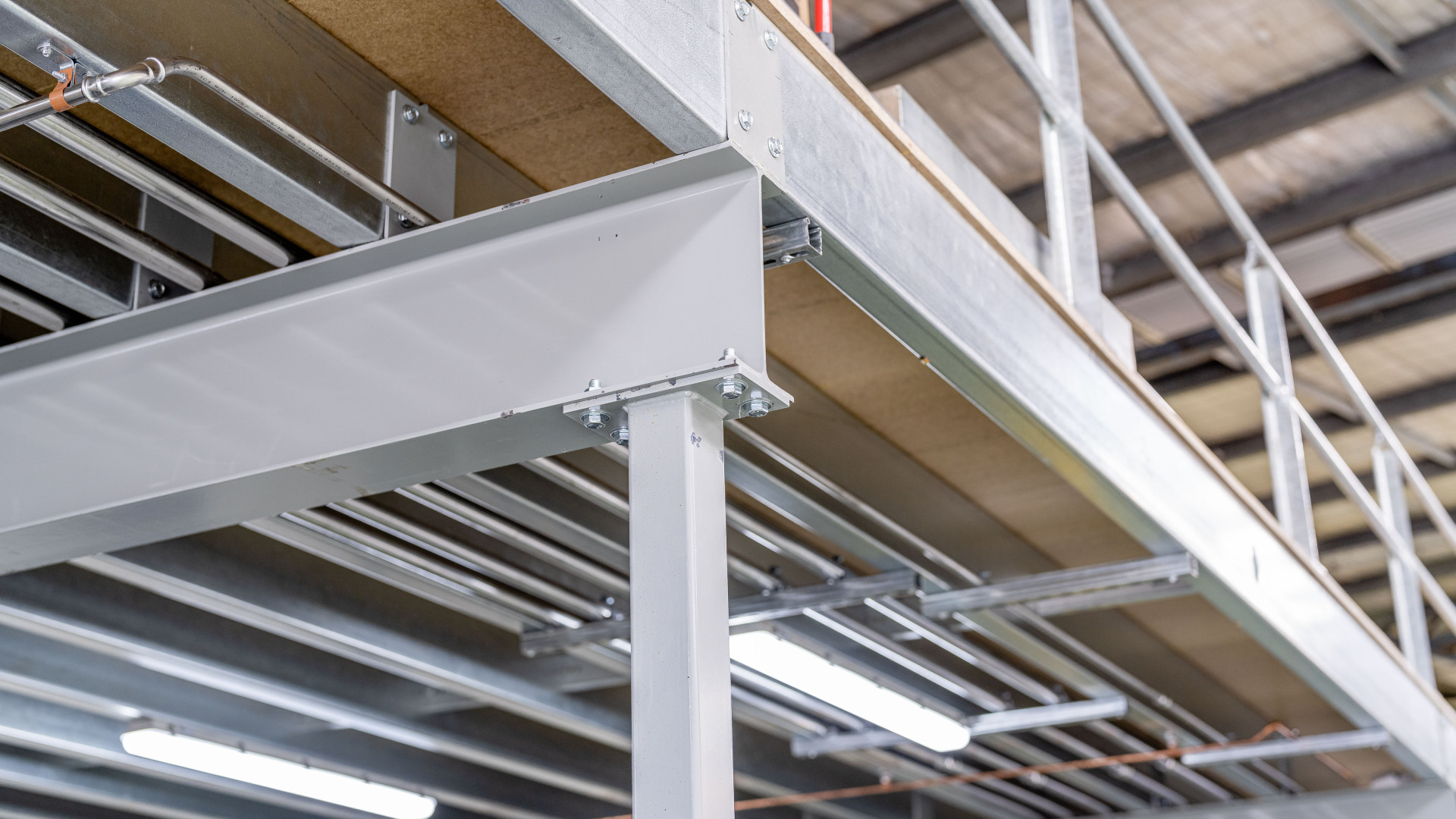
The structural decisions made during the design phase of a warehouse determine how easily that facility can adapt over the next decade. A mezzanine floor specified with scalability in mind delivers far more than additional square metres and provides a reconfigurable structural asset that can expand, adapt and move with the operation it serves. Getting those decisions right at the outset protects the long-term capital value of the investment and prevents costly retrofits down the track.
The long-term cost of building in inflexibility
Fixed construction carries a cost that rarely appears in the initial project estimate: the expense of undoing it. When a business outgrows a fixed mezzanine or a concrete intermediate floor, the options narrow quickly to demolition and rebuild, relocation to a larger facility, or operational compromise. Each outcome is significantly more disruptive and more expensive than the original build.
Modular mezzanine systems break this pattern. Because they are assembled from bolted steel components, they can be extended with additional bays, reconfigured for a new layout or disassembled and relocated when a lease ends. The cost of a well-specified modular mezzanine is not only the cost of the structure, it is the cost avoided over the subsequent ten to fifteen years of the facility's operational life.
Planning with the National Construction Code (NCC) structural provisions in mind from the outset also reduces the risk of non-compliance as regulations evolve or as the building changes occupancy classification. Addressing these requirements at the design phase is consistently less expensive than managing them as a remediation task later.
What makes a mezzanine inherently scalable
Scalability in a mezzanine is a product of how the system is engineered, not an optional upgrade applied after the fact. Three structural features determine whether a mezzanine can grow with a business: its connection method, its bay configuration and its design for disassembly. A modular mezzanine that has all three provides a structural platform that operations managers and architects can plan around with confidence.
Bolted connections and disassembly
Bolted connections are the structural feature that separates a modular mezzanine from fixed construction. Because every column, beam and deck panel connects with standard fasteners, individual components can be removed, repositioned or transported to a new facility without structural demolition or welding works. This approach aligns with the requirements set out in AS 1657:2018 (Fixed platforms, walkways, stairways and ladders) and supports a design that can be modified while retaining certified compliance documentation.
Modular bay additions
A modular bay system allows additional floor area to be added to an existing mezzanine structure without replacing the original frame. New bays attach directly to the installed columns and primary beams, extending the platform in days rather than weeks and requiring no significant civil works on the ground floor. With proper scheduling, bay additions can be staged to avoid disrupting active warehouse operations, which is a critical consideration for facilities running continuous shifts or managing tight fulfilment service levels.
Relocation at end of lease
When a business moves to a new facility, a demountable mezzanine moves with it. The bolted construction that enables reconfiguration also enables full disassembly and reinstallation at a new site, recovering a significant portion of the original capital investment. This avoids the cost of specifying a new structure from scratch at the next facility and reduces the financial exposure associated with lease-end make-good obligations, particularly for structures installed into tilt-panel or steel-framed warehouses.
Designing for automation from the start
Conveyor systems, automated storage and retrieval systems (ASRS) and autonomous mobile robots (AMRs) impose structural demands that must be anticipated during the design phase if the mezzanine is to support them later. The two critical design variables are load capacity and clearance height. Both are far less expensive to engineer correctly at the outset than to retrofit after the structure is installed and certified.
|
Automation system |
Minimum clear height |
Load design consideration |
|
Conveyor system |
500–800 mm above deck |
Additional dead load of conveyor frame and product weight; confirm with manufacturer |
|
Automated storage and retrieval system (ASRS) |
3,000–8,000 mm above floor |
High point loads from mast columns; structural engineer to assess footing and column requirements |
|
Autonomous mobile robots (AMRs) |
Standard operational clearance |
Distributed live load from robot fleet; floor flatness and deflection tolerance are critical |
Table values are indicative ranges only. Confirm load and clearance specifications with the automation supplier and a structural engineer before finalising the mezzanine design.
Engineering extra load capacity
The structural load specification of a mezzanine should reflect not only its current use but the equipment that may be added within the next five to ten years. Conveyor systems and ASRS equipment carry significant dead loads (the static weight of the equipment itself) in addition to the live loads of product and personnel. Specifying additional load capacity at the design stage adds a modest cost to the initial structure but avoids the far greater expense of column upgrades, footing modifications and recertification after the fact. Unistor's engineering team can advise on appropriate load allowances based on the automation systems under consideration at the time of design.
Clearance heights for future equipment
Floor-to-beam clearance is one of the most consequential decisions in mezzanine design and one of the most difficult to change after installation. Conveyor systems typically require a minimum clear height above the mezzanine deck, and ASRS equipment can demand significantly more depending on the unit load type and aisle configuration. Confirming equipment specifications with the automation integrator during the mezzanine design phase — rather than after — allows clearances to be set correctly from the start. Where the final equipment specification is not yet confirmed, designing for a greater clearance than current operations require provides the margin needed to accommodate future systems without structural modification.
How architects and engineers apply these principles
Architects and engineers specifying mezzanine systems for warehouse projects can protect their clients from future renovation costs by building the following requirements into the initial design brief. Each item addresses a design decision that is straightforward to incorporate at the specification stage and costly to remediate after installation.
-
Specify bolted structural connections as a mandatory requirement, not an optional feature
-
Define load capacity allowances above current operational requirements to accommodate future automation equipment
-
Confirm floor-to-beam clearance heights with the automation integrator, or allow for conservative clearances where equipment is not yet specified
-
Reference AS 1657:2018 for fixed platforms, walkways, stairways and edge protection, and AS 4084:2023 for structural steel storage racking compliance
-
Request design documentation that includes future bay expansion connection points built into the primary frame
-
Confirm that the structure can be recertified after reconfiguration without requiring a full engineering review from scratch
-
Include end-of-life provisions in the project specification, such as a demountability clause or a buy-back arrangement
Unistor provides early design assistance and buildability input to architects and project managers at the specification stage, which reduces the risk of design errors that require costly variations during construction. This support includes load case development, clearance coordination with nominated automation vendors and certification documentation aligned to AS 1657:2018 and AS 4084:2023.
A long-term investment in facility resilience
A modular mezzanine designed for scalability is a structural decision with consequences that extend well beyond the initial build. The ability to expand capacity, reconfigure the layout, integrate automation and recover capital at end-of-life changes the total cost of ownership fundamentally. Businesses that build scalability into the original design spend less over the lifetime of the facility, avoid operational disruption during periods of growth and retain more options when their space requirements change.
Unistor manages every stage of this process, from initial design and engineering through fabrication, installation, certification and ongoing expansion, so that the structure a client installs today remains a productive asset rather than a constraint for years to come. The buy-back programme and the engineering capability to design for future automation are not separate offerings. They are components of a single, integrated approach to warehouse infrastructure that treats the mezzanine as a long-term investment in the resilience of the facility. Schedule a consultation to design a future-ready mezzanine solution