

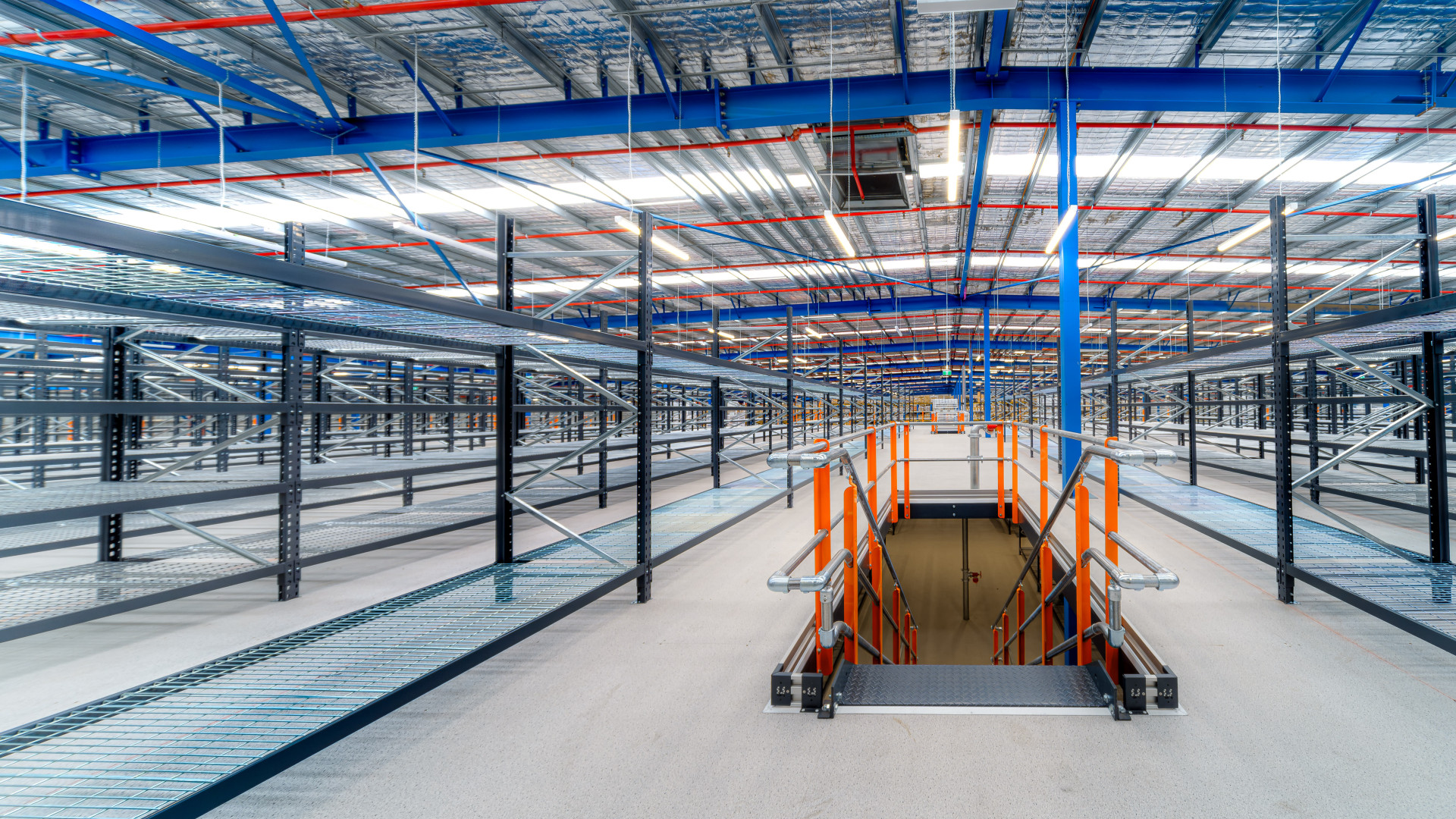
Warehouses are rapidly evolving. The next generation of facilities will be defined by automation, in the form of technologies like AGVs, AS/RS systems and AI-powered inventory management.
Forward-thinking businesses should ask themselves a simple question: are we ready?
Warehouse system integrators are generally tasked with implementing these new technologies. But the truth is that preparing for a more automated future demands another skillset, because you need your warehouse to be structurally prepared for what the future will bring.
That’s what we do at Unistor. As experts in warehouse design, we help system integrators and forward-thinking operators to build structures capable of handling a more automated future.
In this guide we’ll look at futureproof warehouse structures: the automation-ready mezzanines and conveyor-ready platforms that can handle your needs now, and give you much-needed adaptability into the future.
Fit-out with a vision: why futureproofing matters
An automated warehousing future is coming – in fact, it’s already here – and smart businesses are working hard to prepare for it, and to maximise the competitive advantage they will enjoy from it.
On the flipside, if you’re failing to plan, you’re planning to fail.
Retrofitting or redesigning warehouse structures can be an incredibly expensive process, particularly if they weren't originally designed to be easily changed.
Warehouse robotics, AGVs, conveyors and AS/RS systems demand forward-thinking structural design. This represents an investment, but one that can pay off in a huge way, as automated technologies drive greater operational efficiency and lower costs.
There are challenges in building futureproof warehouses, not least the fact that we don’t know exactly what the future might hold. But by building adaptable structures early, you reduce the disruption, downtime and costs of retrofitting a system that wasn’t built with the future in mind.
Structural features that enable future flexibility
Beyond the obvious consideration of automation in futureproof warehouse construction, what exactly makes a warehouse structure ‘futureproof’? A few key features and elements include:
-
Modular design: Modular structures can be altered and expanded as needed, giving you the ability to adapt to changing needs and technologies.
-
Load-rated platforms: Automation equipment like AGVs and AS/RS systems can be particularly heavy, so structures need to be capable of taking that extra weight.
-
Optimised clearance: Conveyor systems and AMRs need enough room to operate, so column spacing and height considerations are key to futureproof structure design.
-
Service routes: Automated systems are powered by electricity, data cables and sometimes pneumatic systems, all of which the structure must accommodate.
-
Removable elements: If a conveyor needs to be rerouted through walls or mezzanine flooring, removable or adjustable panels can make the task so much easier.
Built for today, ready for tomorrow: Unistor’s approach
At Unistor we’re passionate about providing the structural support that warehouse automation demands.
We take a deeply collaborative approach, working hand-in-hand with both warehouse system integrators and forward-thinking warehouse operators to create futureproof structures that meet today’s needs and help businesses prepare for a more automated tomorrow.
The earlier we’re engaged the better, as we can help you to shape the structural layouts that support warehouse automation. We’ll also eliminate the disconnects that tend to arise when the structure is treated as separate from the automation systems that it will eventually host.
Through detailed load analysis and custom engineering, we help you plan for clear access points, ramps, crossover bridges and floor penetrations. We avoid overengineering, instead focusing on building flexible and adaptable structures that are ready for multiple potential futures, not just the one that you might have in mind.
You can see this expertise in projects like Invenco, a large-scale e-commerce facility, and No Birds, a complex multi-level vehicle storage and handling structure.
Supporting advanced system integration
Advanced warehouse system integration demands effective collaboration between designers, integrators, suppliers and installers. The resulting structure must support both the necessary loads and the operational flow that the operator has in mind.
Whether it's coordinating platform heights for conveyors or creating open spans for robotic arms and pickers, a successful outcome is only possible when structural design aligns with the automated systems that will be installed.
That’s why it’s crucial to find a warehouse structural partner who understands automation. It ensures everyone is on the same page from the get-go, that the project runs on schedule, that redesigns and disruptions are avoided, and that the final product is both fit for purpose and prepared for the future.
The long-term advantage: reducing lifecycle costs
Futureproofing your warehouse structure is about reducing rework, avoiding disruptions and minimising costs over time. Cheap, cheerful, short-term solutions are naturally tempting, but they fail to account for future needs and opportunities like automation, which is already having transformative effects on warehouses and distribution centres across the globe.
At Unistor our designs reduce the need for expensive rework by prioritising futureproofing over short-term thinking. We believe the focus should be on long-term value: warehouse structures built with one eye on the future, offering the adaptability and scalability to capitalise on whatever tomorrow might bring.
Another factor in how to make existing warehouses futureproof is through compliance-first builds. When you ensure pre-certified structural integrity, you’re always ready for future upgrades, and you reduce the need for repeated certification, and the costs this can incur.
If you’re wondering how to make an existing warehouse futureproof, the answer lies in building upgrade-ready systems that reduce lifecycle costs, rather than inflate them.
Why warehouse system integrators choose Unistor
True warehouse automation is built on a strong, well-planned foundation.
While warehouse system integrators can make a structure work, they shouldn’t have to. When a structure is designed and built to handle your unique needs, and to adapt to changing needs into the future, automation becomes less of a hurdle, and more of an organic step.
Trusted by major e-commerce, logistics and 3PL operators, at Unistor we’ve built an enviable reputation for integration alignment, particularly in terms of mezzanine warehouse systems. We take end-to-end responsibility for all things structural – design, certification, site management – so you can focus on what you need to.
In short, the earlier you bring in an expert warehouse fit-out partner like Unistor, the more successful your project will be.
Ready to collaborate? We are too.