

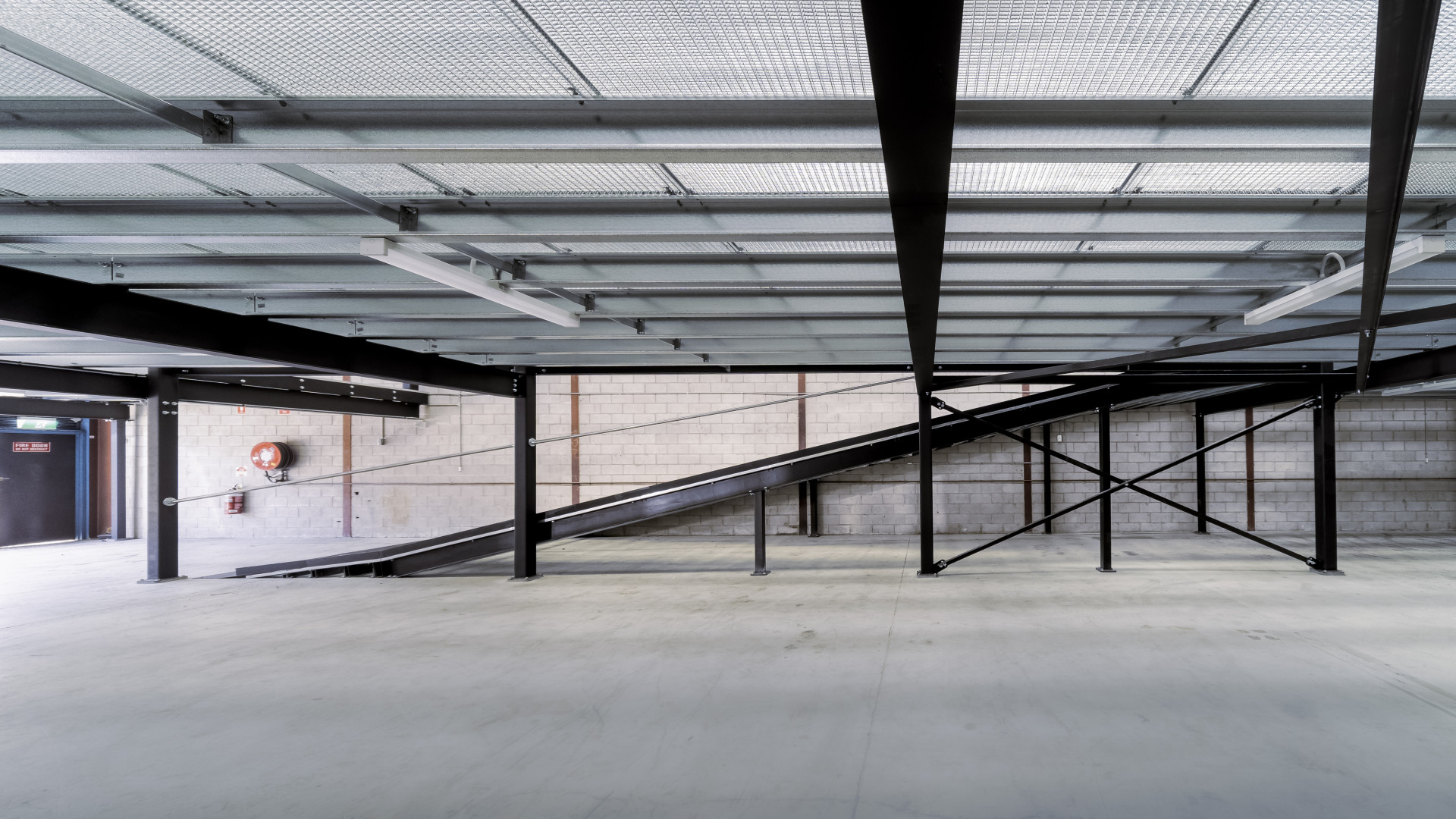
Selecting the right mezzanine flooring is one of the most important decisions when planning additional warehouse space. The floor you choose affects safety, workflow, compliance, maintenance and the long-term performance of the structure. Solid panels and steel grating behave very differently, and each flooring type offers advantages depending on how the mezzanine is used. Understanding these differences helps warehouse operators plan a system that supports their daily activity and meets all operational and compliance requirements.
Why Flooring Choice Matters in Mezzanine Design
The flooring used on a mezzanine directly influences how people and equipment move, how safe the environment is and how well the area below the platform performs. Solid panels and grating offer different levels of comfort, rolling performance, visibility, airflow and noise control. Choosing the right system ensures the mezzanine supports the work taking place above and below it while aligning with fire engineering requirements and WHS obligations. The correct flooring selection also reduces maintenance and supports the long-term structural performance of the mezzanine.
How Solid Panels Perform in Daily Warehouse Operations
Solid mezzanine panels provide a continuous and comfortable walking surface. They suit warehouses with high pedestrian activity and varied equipment use.
Pedestrian traffic
Solid panels offer a secure and stable surface for walking. They create an environment that feels more like a ground-level floor, which helps staff move confidently and safely.
Trolley and pallet jack movement
A smooth surface is essential for rolling loads. Solid panels allow trolleys, pick carts and pallet jacks to move without obstruction. This makes them suitable for pick modules, packing areas or any zone where manual handling equipment is used.
Dust, debris and cleaning requirements
Panels support easy cleaning and debris control. Dust, packaging fragments and product residues remain on the surface rather than falling through the floor, which improves hygiene and reduces disruption for equipment or goods stored below.
Lighting levels and shadowing
A solid surface reduces shadowing under the mezzanine because it absorbs rather than transmits light. This creates a more consistent lighting environment below the platform, which benefits packing benches, conveyors or storage areas.
Worker comfort and noise
Panel flooring is quieter underfoot than steel grating. It absorbs more sound and vibration, which improves comfort for staff and reduces the noise experienced throughout the warehouse.
Where panel flooring is preferred
Panel flooring is generally chosen for:
-
Pick modules
-
Packing and returns areas
-
Mezzanine offices
-
Walkways and high-foot traffic areas
-
Storage platforms requiring a sealed surface
-
Any area using trolleys or pallet jacks
How Grating Performs in Daily Warehouse Operations
Steel grating floors are used in environments where airflow, drainage or compliance requirements take priority over rolling performance or comfort.
Pedestrian traffic
Grating creates a more industrial walking experience. Anti-slip finishes improve surface grip, but the open structure may not suit all warehouse users. Pedestrian-only traffic is safe when used in the right environment, but grating is less suitable for areas requiring long periods of standing or frequent movement.
Trolley and pallet jack movement
Grating does not suit pallet jacks, trolleys or small-wheeled equipment. Wheels can catch between openings, and movement becomes unstable. For this reason, grating is recommended only in areas without rolling loads.
Dust, debris and cleaning requirements
In some industrial settings, operators prefer debris to fall through the grating rather than accumulate on the surface. This can be an advantage for plant platforms, mechanical services or areas requiring drainage.
Lighting levels and shadowing
Grating allows light to pass through the mezzanine. This can help illuminate lower levels, but it can also create a patterned shadow, which may be unsuitable for environments requiring consistent visibility.
Ventilation and airflow
Grating offers strong airflow benefits. The open design allows heat, vapour and smoke to travel through the floor, which is helpful for ventilation modelling and may support fire engineering strategies. This is one of the most common reasons grating is specified.
Worker comfort and noise
Grating is louder than solid flooring. Footsteps and impact noise travel easily through the structure. It also transfers vibration more readily, which may affect sensitive equipment.
Where grating is preferred
Steel grating is generally used for:
-
Heavy industrial environments
-
Equipment platforms
-
Mechanical and plant access areas
-
Areas where ventilation and drainage are critical
-
Designs where fire engineering requires sprinkler penetration
-
Access walkways around machinery
Mixed-Use Mezzanines: When Both Flooring Types Make Sense
Many warehouses benefit from using both flooring types on the same mezzanine. A mixed approach allows each zone to perform at its best and meet specific safety or compliance requirements.
Examples include:
-
Panels in picking zones, where trolleys and pallet jacks are regularly used
-
Grating around plant equipment, where airflow and drainage are essential
-
Panels in packing areas, to support rolling loads and provide a clean working surface
-
Grating near sprinkler heads or ventilation zones, where airflow helps support fire engineering needs
-
Panels in walkways and high-traffic areas, to improve comfort and reduce noise
Unistor frequently designs hybrid mezzanines that combine the strengths of each flooring type, delivering a structure that supports the workflow while meeting WHS and compliance requirements.
How Unistor Helps You Select the Right Flooring System
Choosing the right mezzanine flooring is a structural and operational decision. Unistor works with warehouse operators to evaluate workflows, equipment use, load requirements and compliance considerations before recommending a flooring solution.
Our team assesses:
-
The equipment used on the mezzanine
-
Load capacity and structural design
-
Fire engineering and ventilation requirements
-
Pedestrian safety and WHS obligations
-
Noise and vibration considerations
-
Lighting and visibility needs
-
Where mixed-use flooring would improve functionality
This engineering-led approach ensures each mezzanine floor performs as intended and works seamlessly with the broader warehouse layout.
Speak with Unistor’s engineering team to select the right mezzanine flooring for your warehouse layout and operational needs.