

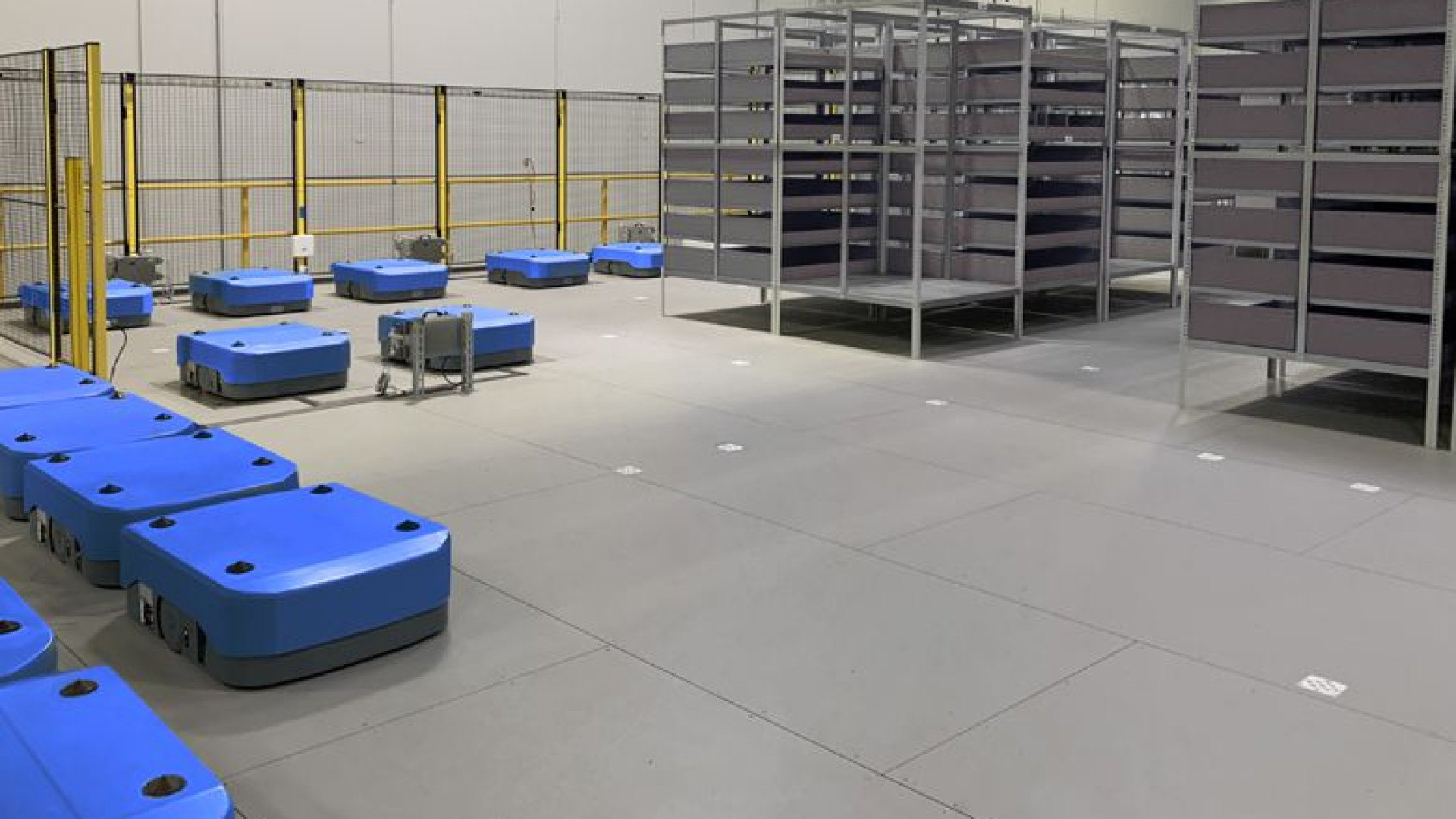
Automation is rapidly reshaping how warehouses are planned, built, and operated. As businesses invest in AMRs, AGVs, ASRS, conveyor networks, and multi-level pick modules, attention often goes to the technology itself, yet the success of these systems depends heavily on the structure they run on.
Most warehouses were built long before automation became mainstream. As a result, many facilities discover too late that their floors and mezzanines were never engineered for the precision, load behaviour, or vibration control required by modern robotic systems.
Creating a warehouse that is genuinely automation-ready begins long before installation. It starts with designing a floor that can support the equipment’s performance, maintain structural integrity over time, and adapt to future technology upgrades. This article explores how Unistor engineers floors and mezzanine systems specifically for automation and what every business should consider when planning for the next generation of warehouse technology.
Why Flooring Is Critical to Automation Performance
Although automation often appears to be about robotics, navigation software, and intelligent systems, its foundation is engineered into the structure itself. Without the right floor beneath it, even the most advanced automation will struggle.
Automation interacts directly with flooring through:
1. Cohesion of friction
AMRs and AGVs rely on consistent surface friction and stable wheel-contact conditions. Uneven, smooth or soft flooring increases the likelihood of wheels slipping or skidding, which can cause AMRs and AGVs to lose positional accuracy and accelerate wheel wear.
2. Point Load Concentration
Many robotic systems and pallet-handling devices apply intense wheel or leg loads on very small surface areas. Floors not designed to carry these loads can dent, flex, deform, or degrade prematurely.
3. Deflection Tolerance
Automation manufacturers specify strict allowable deflection limits. Excessive floor flex affects:
-
Navigation accuracy
-
Conveyor alignment
-
ASRS stability
-
Robotic calibration
Even minor deflection can cause significant performance issues.
4. Surface Smoothness
Surface inconsistencies create:
-
Tracking drift for AMRs
-
Poor sensor readings
-
Conveyor vibration
-
Alignment problems in robotic pick zones
5. Vibration Control
Automation thrives on stability. Vibration affects barcode scanning, robotic positioning, and load placement accuracy. Proper floor design minimises movement through bracing, material selection, and substructure engineering. In automation-heavy environments, the floor is as important as the robot itself.
The Engineering Behind Automation-Ready Floors
Unistor’s engineering team follows a structured process to design floors that will meet (and often exceed) automation performance requirements.
1. Load Calculations & Structural Behaviour
We begin with a detailed analysis of:
-
Static loads (ASRS frames, conveyors, racking)
-
Dynamic loads (AMR/AGV wheel pressure, pallet movement)
-
Point loads (high-stress wheel loads in narrow paths)
-
Load distribution across the mezzanine
This ensures the floor can manage both peak loads and repetitive stress over many years of operation.
2. Deflection Control
Automated systems require very low deflection tolerances, often well below those acceptable for non-automated facilities.
Unistor designs mezzanine structures with:
-
Stronger beams
-
Closer joist spacing
-
Bracing designed to minimise movement
This reduces flex and protects automation alignment.
3. Choosing the Right Flooring Surface
For automation, the ideal flooring surface must be:
-
Smooth
-
Strong
-
Consistent
-
Low in vibration
-
Resistant to abrasion
Engineered composite flooring systems such as ResinDek® are often specified because they provide:
-
Long-term durability under rolling loads
-
Predictable wheel performance
-
Lower noise and vibration
-
Better compatibility with AMRs and AGVs
-
Lighter dead load on mezzanine substructures
4. Designing for Vibration Dampening
We consider:
-
Material deflection characteristics
-
Substructure stiffness
-
Dynamic load behaviour
-
Connection methods
This ensures optimal performance for:
-
Conveyor systems
-
Robotic arms
-
Sensor-driven automation
-
Barcode scanning gantries
5. Durability & Wear Resistance
High-frequency automation can produce repetitive wear patterns. Floors are engineered to withstand:
-
Repetitive traffic
-
Wheel abrasion
-
Impact loading
-
Long-term operational cycles
This protects warehouse uptime and reduces maintenance needs.
Seamless Integration with Automation Systems
Modern automation is sophisticated and requires precise alignment during installation and throughout its lifecycle. Unistor collaborates with automation vendors during:
-
Concept design
-
Load analysis
-
Platform engineering
-
Setout and installation
We ensure structural systems align with:
-
AGV/AMR travel paths
-
Charging station locations
-
ASRS anchor points
-
Conveyor elevations
-
Robotic pick module placement
Automation vendors often supply detailed engineering specifications for:
-
Maximum deflection
-
Minimum stiffness
-
Wheel-load thresholds
-
Flatness tolerances
Unistor incorporates these into the mezzanine design to ensure seamless integration and long-term operational reliability.
Designing Floors for the Future: Preparing for What’s Next
Automation evolves quickly. Designing a floor only for today’s requirements can limit a warehouse within a few years. Unistor takes a forward-looking approach to ensure every structure can adapt over time.
Key future-proofing considerations include:
-
Floors designed to support multiple types of automation without modification
-
Substructures capable of supporting additional mezzanine tiers
-
Flexibility to incorporate future conveyor systems or robotic zones
-
Allowances for cabling, charging lanes, and pathway extensions
-
Structural provisions for heavier loads as automation density increases
A warehouse that is automation-ready today must be equally capable tomorrow even as technology changes.
Long-Term Benefits of Automation-Ready Flooring
When flooring is designed correctly from the start, operations gain:
1. Higher Throughput Efficiency
Automation runs more smoothly and consistently.
2. Reduced Equipment Wear
Less resistance and fewer vibration issues mean longer machine life.
3. Lower Maintenance Costs
Fewer flooring failures or automation recalibrations.
4. Safer Workspace
Reduced vibration, predictable rolling behaviour, and stable structures improve safety for both people and robotics.
5. Extended Mezzanine Lifespan
A strong, stable floor protects the structure for decades.
6. Seamless Scaling
Future automation can be added without costly structural upgrades.
Final Thoughts
Infrastructure is the foundation of automation. When your floor is engineered correctly, your AMRs, AGVs, conveyors, and ASRS systems operate at peak efficiency. When it isn’t, automation breaks down, often in unexpected and costly ways.
Designing automation-ready floors is one of the smartest investments a warehouse can make to safeguard future capacity, flexibility, and resilience.
If your operation is exploring automation for the first time, expanding an existing system, or planning a multi-level upgrade, the flooring beneath your equipment will play a defining role in long-term performance.
Speak with Unistor’s engineering team to discuss your automation plans and ensure your facility is built on a foundation designed for the future.